Thursday, July 22, 2010

ICJ rules Kosovo's independence legal

Today the International Court of Justice has issued its advisory opinion on the unilateral declaration of independence by Kosovo. While the full reading is ongoing the International Court of Justice President Hisashi Owada did say there was no "prohibition on declarations of independence" in international law and as a result Kosovo's declaration "did not violate general international law" making the declaration legal.

While the full implications of the decision are pending the potential precedent being set is already clear. By ruling that international law does not prohibit a declaration of independence and likely by extension recognition of such a declaration countries now have legal cover to recognize other separatist entities around the world. One possible consequence is more recognitions of Abkhazia and South Ossetia.

Thursday, June 24, 2010

Tensions escalate in the South Caucasus and the Middle East

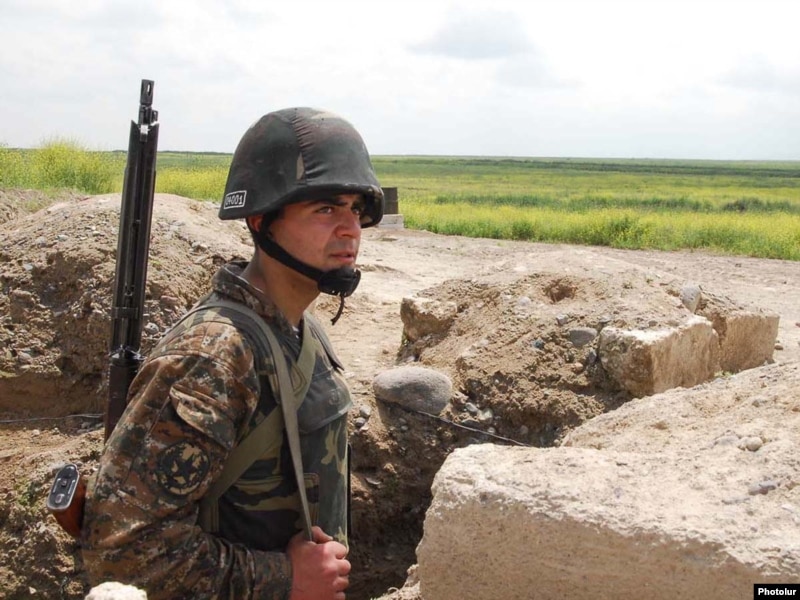
A clash between Armenian and Azeri soldiers in the area of Nagorno-Karabakh that left four Armenian soldiers and one Azeri soldier dead took place on June 18 as the worst in a rising number of incidents along the front. The attack took place after a meeting to discuss the disputed region seemed to lead to Azeri President Ilham Aliyev leaving in apparent frustration over the situation. Hundreds of incidents have apparently occurred since then with another Azeri soldier being killed on June 21st. While both sides have accused the other of initiating the clash it seems the incident is a consequence of Azerbaijan failing to modify the Madrid Principles on the Nagorno-Karabakh conflict in its favor.

In the recent past Azerbaijan has warned that if it does not see a change in the stalemate, specifically one that would be more accommodating to the Azeri position, that they would resort to the use of force. Since the clash a number of comments from Azerbaijan suggest the escalation on the front is intended to provide a pretext for Azerbaijan to retake Nagorno-Karabakh. Aliyev has reportedly said he is sure Karabakh would be "liberated" soon and Azerbaijan's foreign minister warned the attacks would continue until Baku regain control over the territory.

Other events in the region could signal an international element to this potential conflict. Iran has recently raised fears of war along its border with Azerbaijan in response to an alleged build-up of U.S. and Israeli military power in the country. This is believed by Iran to be preparations for an airstrike against Iran by the U.S. and Israel. However, it is possible the U.S. and Israeli forces are responding to the situation in Nagorno-Karabakh. Both countries have strong ties with Azerbaijan while Armenia is aligned with Russia. The Iranian buildup does present another potential international actor, however, as it has begun massing forces in response to this alleged buildup by the United States. Iran has more established ties with Armenia and has made threats in the past towards Azerbaijan, especially in light of the potentially secessionist Azeri population in Northwestern Iran.

As the situation in the Middle East approaches the point of war, the conflict between Armenia and Azerbaijan could provide a trigger or even another front in such a war. Such developments in the Middle East would help to distract the world community from the situation in the South Caucasus. Even further should these events coincide Russia and Iran could exchange places with Iran providing support to the Armenians and Russia giving Iran an umbrella of protection from Israeli nuclear attack or any U.S. invasion.

Sunday, June 13, 2010

Israel and the United States building up for Iran strike

Only two weeks after a report Israel was arranging for a nuclear-armed Dolphin-class submarine to remain off Iranian shores at all times comes another saying Saudi Arabia has conducted exercises to insure Israeli aircraft attacking Iran will not be intercepted by Saudi fighters. Though there are no indications Saudi Arabia would directly take part in a strike on Iran it would inevitably be drawn into the conflict as a result of its assistance for Israel.

At the same time as these developments concerning Israel are others concerning the U.S. Navy movements in the region. A Carrier Strike Group headed by the U.S.S. Harry Turman is being deployed to the Persian Gulf for six months. Most notably this Strike Group currently includes a German air defense frigate to improve interoperability of the two navies. The Truman Strike Group was also taking part in interopability exercises with the French aircraft carrier Charles de Gaulle and elements of the British air force.

This deployment for the Strike Group is reportedly part of a larger buildup planned in the region with the possibility of four or five carrier groups deployed near Iran by the end of July or beginning of August. The interoperability exercises and Israel's actions raise the prospect of a coalition unlike the one formed for the war with Iraq.

U.S.-French operations were intended to allow for the French and Americans personnel and aircraft to essentially be interchangeable. The fact a carrier group so involved in interoperability exercises with the great military powers of Europe is being deployed to the shores off Iran at this crucial point in time lends credence to the reports of a buildup.

Israel's seizure of a flotilla of ships carrying aid to Gaza has heightened concerns about war erupting in the region with both Turkey and Iran talking about providing military escorts to future aid efforts. In the case of Iran two Iranian Red Crescent ships are preparing to deliver aid to Gaza and plan to have volunteers from Iranian marines on board as a deterrent. Israel has stated it will use greater force in the future against other aid missions. If this effort by Iran goes forward it could provide them a casus belli to pre-empt any efforts by the West towards launching a coordinated strike against its nuclear facilities.

Sunday, May 9, 2010

Ukraine's East-West divide risks exploding

Following the election of Viktor Yanukovych as the President of Ukraine and his appointment of a new government coalition led by his Party of Regions fears arose that Ukraine would see a shift back towards Russia. The election and subsequent government appointment saw considerable controversy and a number of accusations were levied by the opposition. It is no surprise then that the realization of Ukraine's geopolitical shift would bring even greater resistance.

As the governing coalition sought to extend the lease for the Russian base at Sevastopol members of the opposition took action, sparking chaos in the parliament. Members of the opposition threw smoke bombs and eggs at Volodymyr Lytvyn, the Speaker of the parliament, and outside a protest raged. The chants of "death to traitors" and use of physical violence show the potential backlash from Ukraine's sway towards Russia.

In the end the ruling coalition was successful in passing the deal with Russia that included a cut in the price of natural gas imported from Russia. However, ultimately the cut only brought gas down from an inflated price to the market level, which had been Russia's intended target all along. Part of this new agreement requires Ukraine to buy more gas than it needs while also allowing Russia to bypass Ukraine's pipelines.

The latter possibility already has plans in motion with the South Stream pipeline project. This proposed pipeline would cross the Black Sea, bypassing Ukraine and NATO member Turkey to provide natural gas directly to customers in Europe. It would also, together with the Nord Stream project, increase Gazprom's hold on European energy by pushing towards Western Europe.

Russia has used the possibility of South Stream as leverage to push for an even bigger plan, a merger of Naftogaz, Ukraine's state-owned natural gas company, with Gazprom. Ukraine's leadership has not been eager to accept such an arrangement, however, this proposal would eliminate the perpetual flirtation with bankruptcy that has been a constant threat to the company and Ukraine. Yet Russia may not have any intention of actually pushing for a full-on merger, but simply be using the idea to put pressure on Ukraine's government and Naftogaz, which have been supportive of a gas consortium including the EU as a partner. Part of a consortium deal could be partial ownership of Naftogaz, possibly a controlling interest or half-and-half deal, in exchange for removing certain provisions of the recent natural gas deal, including those allowing them to bypass Ukraine altogether. Russia could also insure the European Union is locked out of the project. Ironically, despite the resistance to a merger in Ukraine the European Union has expressed openness to the idea, though steps to keep the EU out might change their perspective.

Any deal with Gazprom that essentially gives control of Ukraine's gas monopoly to Russia, whether through a merger or consortium, will inflame already boiling tensions between the government and the opposition. Already opposition leader and former Prime Minister Yulia Tymoshenko is moving for an impeachment of Yanukovych alleging his deals with the Russian government are state treason. She is also seeking to have the parliament dissolved in the hopes of toppling the pro-Russian coalition. Tymoshenko has intensified rhetoric against the current government by accusing it of turning Ukraine into a dictatorship and turning over its territories to Russia. All of this is being done in preparation for a major rally outside parliament on May 11 in order to force a new election.

How the government responds to the proposed gas merger and the planned protests could signal a critical development in Ukraine's future. While most supporters of the opposition hope for a recap of the Orange Revolution in 2004 there has been speculation of a more disastrous scenario: a Yugoslavia-type breakup where Ukraine ceases to be a country. At issue is Yanukovych's alleged disregard for Western Ukraine from appointing governors to ignoring pleas from intellectuals who are against the slide towards Russia. The fight in parliament over extending the Russian base lease gives a preview of the potential for violence. If Yanukovych accepts a gas merger or similar plan with Gazprom or the protests outside parliament turn violent sparking a government crackdown the nation could quickly descend into a civil war between the Eastern and Western parts of Ukraine, a microcosm of the greater geopolitical tug-of-war that risks pulling the country apart.

Saturday, May 1, 2010

Subtle buildup to Second Karabakh War?

While the talk of war has been heating up over the past year a number of signs seem to indicate such a development may be near at hand. In Armenia Major General Arkady Ter-Tadevosyan has noted Azerbaijan's buildup of ammunition and threats of war as a sign that war is highly probable, but says he does not believe it would extend to Armenia itself given its membership in the Collective Security Treaty Organization.

The strongest signs of war, however, are coming from Azerbaijan. Referring to a meeting there with President Aliyev a spokesman for the Defense Ministry praised the military's capabilities saying it would easily defeat Armenia in a new war, and displayed a desire for the military option to be used to resolve the Nagorno-Karabakh dispute. Aliyev was paraphrased as saying the reason for not resorting to force is the hope internationally-mediated negotiations could resolve the issue peacefully, but the spokesman says the talks have proved fruitless on this matter leaving no other option but the use of force. This could be the military putting increasing pressure on Aliyev for the use of military force or indicate a decision to use military force has already been made. With the former there is still cause to believe a war may be imminent as Aliyev could find himself bowing to pressure from the military.

International pressure, in addition to domestic pressure, may cause Azerbaijan to take action against Nagorno-Karabakh. While the U.S. has largely supported Azerbaijan's stance on Nagorno-Karabakh it has also been pushing for a reconciliation between Turkey and Armenia. This effort at bettering ties has greatly strained Azerbaijan's relationship with the U.S. and Turkey, its two most important allies in the region. Despite the negotiations between Armenia and Turkey being called off it likely still leaves Azerbaijan feeling isolated and without stalwart allies, giving them all the more reason to act on their own.

One more potential sign of trouble in the region is a recent initiative by Nagorno-Karbakh to lobby foreign states for recognition. Done with the active encouragement of Armenia it creates another possible point of conflagration. While recognition is not likely to be forthcoming from many countries, should it succeed in persuading a single country it could be taken by Azerbaijan as a casus belli. This would still give Armenia room to accuse Azerbaijan of unprovoked invasion since it would be a third country responding to a direct request from Nagorno-Karabakh as opposed to recognition from Armenia or at Armenia's request. It also prepares the ground for recognition should Azerbaijan instead strike over dissatisfaction with the stalemate in talks.

Regardless of who sparks off a conflict these correlating events could indicate a war is soon to erupt in the region that will once again draw the attention and concern of the world to the Caucasus and inevitably, Russia.

Friday, April 30, 2010

Hezbollah: Lebanon's second army

Speculation is rife that this summer will see a war with Hezbollah and ultimately a war across the Middle East. Even if this Middle Eastern War starts with an attack on Iran or a pre-emptive strike by Iran it will inevitably come to include Hezbollah and Lebanon. While the Lebanese military has made it clear it intends to get involved in any future conflict with Israel it is ultimately Hezbollah that will spearhead Lebanon's military efforts and achieve the best results. This now rapidly developing role of Hezbollah as Lebanon's elite military force did not come quickly, but was the consequence of nearly three decades of conflict.

Beginning of the Resistance

In 1982 Israel launched an invasion of the country of Lebanon in order to expel the Palestine Liberation Organization. Despite attempts by Syria and its Lebanese allies to stop the attack, Israel succeeded in expelling the PLO and began an occupation of much of the southern half of Lebanon. A multinational force was soon brought into the country to oversee the PLO's withdrawal. At this time Iran stepped into the fray and began training 1,500 Lebanese Shiites who followed the doctrine of Iran's Supreme Leader Ayatollah Khomeini.

Iran sought to create in this group a militant force that could replicate Iran's Islamic Revolution in Lebanon. This group constituted what would first be known as the Islamic Resistance and eventually come to be known as Hezbollah. Soon the Islamic Resistance made their first decisive mark on Lebanon's history with the bombing of the U.S. Marine and French paratrooper barracks in Beirut, which claimed 241 U.S. and 58 French soldiers.

Initially, the response of Western military forces was defiance. U.S. and French forces retaliated to the attacks with strikes against Syrian forces and planned further attacks together, which would target Iran's Revolutionary Guard forces in the country. However, while the military forces had an appetite for war the American public and Congress were not willing to risk more deaths like those in the bombing and convinced President Reagan to abandon the country. The withdrawal of Western military forces was the first strategic victory of the militant force that would become the Hezbollah of today.

Uniting the Resistance and Defeating Israel

With the removal of the Multinational Force in Lebanon all that remained was the Israeli military and its proxy forces.While Israel did withdraw from most of South Lebanon in 1985 it retained its position on a strip along the Israeli border. However, the Islamic Resistance that had expelled the West was still disorganized and unable to present a united front against Israeli forces, which had much stronger motivation to continue the war.

As the Resistance attempted to bring together their disparate forces Israel struck out with its "Iron Fist" policy pursuing a strategy of all-out war that saw entire villages destroyed in the hopes of preventing Lebanese Shiite resistance forces from banding together against Israel. However, far from extinguishing this movement, Israel's actions only inflamed the resistance and Hezbollah increasingly emerged as the focal point for the force. It was during this time that Hezbollah began its rocket attacks against Northern Israel.

While Hezbollah's efforts focused on the Israeli occupation, its effort to unite the Shiite resistance soon lead it to take part in the ongoing civil war during the War of the Camps. In this battle Hezbollah confronted Amal, then the main Shiite militia force, and even Amal's ally Syria. The conflict thus was not only for the right to lead Lebanon's Shia community, the largest group in Lebanon, but a battle to determine if Syria or Iran would have primacy over them as well. Even after the conclusions of the War of the Camps this feud over leadership continued until Hezbollah won out. Unlike other militias which by then become incorporated into the Hezbollah force, Amal retained its independence but from then on it would essentially be subordinate to Hezbollah.

Even after the conclusion of Lebanon's civil war Israel continued its occupation of the border region and made countless failed attempts to destroy the rising organization. Yet, despite its best, Israel could not eliminate the force and in 2000 was decided to make a unilateral withdrawal from the region entirely. Around the world and in Lebanon this event was seen as the first major defeat for Israel and Hezbollah received much of the credit. This began to lift up the image of Hezbollah in the Arab world as it was considered the first victory for Arab forces against Israel.

Continuing the Fight


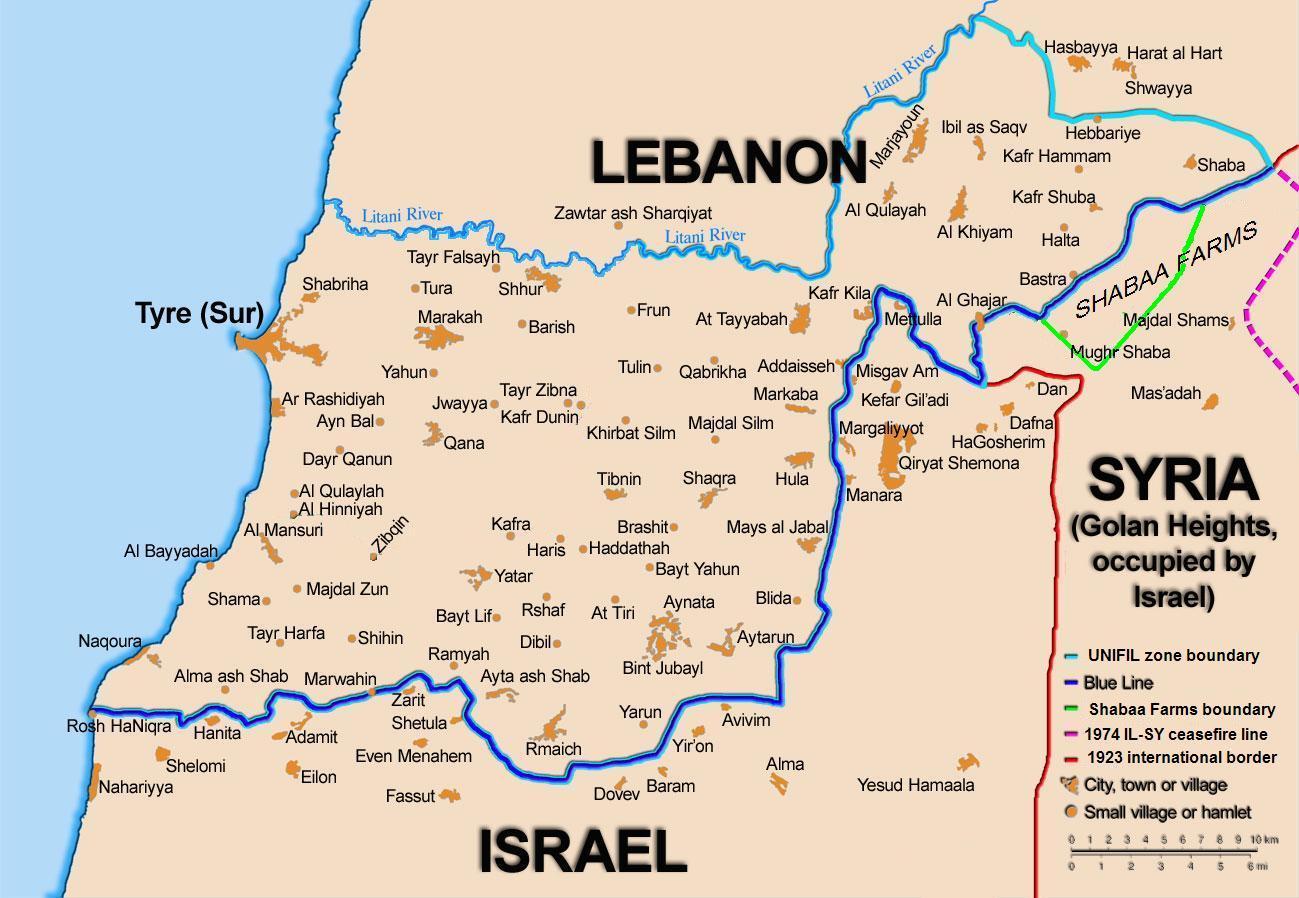
Even with this significant victory the liberation of Lebanon was not considered complete for Hezbollah until the Shebaa farms were reclaimed as well. Thus began another multi-year low-intensity conflict centered on the disputed border territory.

Hezbollah's opening salvo in this conflict was devastating politically: the group launched a raid that led to the capture of three Israeli soldiers. After several years Hezbollah exchanged the bodies of the long-dead soldiers as well as a captured Israeli citizen for hundreds of prisoners and the remains of dozens of Lebanese militants and civilians. Intermittent fighting continued in the region with cross-border attacks and strikes occurring frequently.

Rallying Lebanon to the Resistance

Though Hezbollah had long been involved in the politics of Lebanon, a major political shift occurred that ultimately opened the way for Hezbollah to gain even more power in the country. Rafic Hariri was assassinated on February 14, 2005 by a car bomb and blame was soon laid on Syria and the Lebanese government. The response was a series of mass protests by anti-Syrian officials and activists, which came to be known as the Cedar Revolution. As a result of this mass action the pro-Syrian government resigned and Syria declared its intended compliance with a UN resolution requiring its withdrawal from Lebanon. Not long after this Hezbollah staged a pro-Syrian demonstration that also objected to requirements under the same UN resolution for its militia to disband. This Hezbollah-organized demonstration was several times larger than any of those opposing Syria and proved it was not only a capable militant group, but an effective political one as well.

Just a year later Hezbollah gained another opportunity to display its strength when it launched a cross-border attack on Israeli troops that sparked a month-long military campaign by the Israeli military against the group. The 2006 Lebanon War was on a much greater scale than its past operations against Hezbollah as the organization had built up a considerable defensive network in Southern Lebanon during Israel's six-year absence. Not only did Hezbollah achieve several tactical victories during the campaign and ultimately a strategic victory due to Israel's withdrawal, the political gains were also considerable. More than surviving the group had emboldened its supporters and grew its support base within all the various demographic groups in Lebanon.

They soon showed this broadening of support with protests launched later in the year against the sitting pro-Western government in the country, specifically with regards to forming a national unity government. Hezbollah's mainly Shiite coalition had expanded to include the anti-Syrian Aoun's Free Patriotic Movement as well. A year and a half of protests showed little progress until the Lebanese government made a move to crack down on Hezbollah. The end result was the seizure of parts of Beirut by Hezbollah and its allies with the pro-government parties suffering stinging defeats as the military sat idly by, proving no force in the country could now stand up to the organization. In response to this crisis the demands of Hezbollah and its allies was granted with the group gaining considerable influence with veto power in the government and having Hezbollah's militia given official support from the Lebanese government.

The 2009 elections formally ended this arrangement with Hezbollah's opposition losing the critical seat in government needed for veto power, but the pro-Western parties did not regain their position of authority either as Lebanese President Suleiman, appointed as part of the 2008 compromise, chose several positions in the government. Yet, this can be seen as retaining Hezbollah's strength as the President has frequently iterated his support for the Hezbollah military group.

A Growing Military Power


Now, with war increasingly on the horizon, Hezbollah is more and more solidifying itself as a crucial military force in Lebanon. With its political influence at all time highs, including the apparent full support of the President and military, the group is accelerating its buildup. Already having a substantial arsenal of short and medium-range rockets reports are emerging that Syria has transferred Scud missiles to Hezbollah. Adding these onto its rocket and missile arsenal means the group now has the capacity to strike anywhere in Israel and put them through a far greater hell than in 2006 with Israelis all across the country rushing into bunkers.

This growing arsenal is not limited to surface-to-surface weapons as some Hezbollah cells are receiving extensive training in the use of anti-air weaponry that could be moved into Lebanon at the beginning of a war and immediately serve as a major deterrent to Israeli air power. Others are being trained in the use of anti-ship weaponry that would allow the group to deter Israeli amphibious attacks and attacks from offshore. Hezbollah already proved its capabilities in this area with its attack on the INS Hanit during the 2006 war. With more training and a larger arsenal of anti-ship weapons Hezbollah could prove to be highly capable at keeping the Israeli navy at bay. A large network of anti-tank lines integrated with a communications network and system of highways that can be closed off in the event of war has also been built inside Lebanon.

Hezbollah's offensive abilities have also greatly increased. With Iranian training Hezbollah has built up a force of some 5,000 commandos for use in a future war. These forces would infiltrate into Northern Israel and seize control of several important areas along the border potentially boxing in Israeli forces invading Southern Lebanon. With greatly improved anti-armor capabilities, a larger overall military force, and with tactics even more polished than in 2006 Hezbollah has evolved an offensive capability that could allow it to inflict serious damage in Israel itself and, in Lebanon, bring about massive casualties to Israeli ground forces.

Even excluding guaranteed support from the Lebanese military and likely support from Syria, Hezbollah has positioned itself to be far greater threat to Israel than any group before. Combined with its domestic Lebanese and its broader international support Israel is sure to find itself confronting the greatest threat to its existence in its history.

Saturday, February 6, 2010

Middle East forces preparing for battle

For the past few weeks reports have emerged that Israel is preparing an attack on Iran. Reportedly it involved cooperation between Israel's navy and the Fifth Fleet of the U.S. Navy in charting waters for an Israeli naval attack and use of special operations forces. Additional preparations were made to mark out an Israeli air route for a strike against Iran. This coincides with a U.S. buildup in the Persian Gulf including the deployment of anti-missile defenses in various Gulf nations and on U.S. naval ships. Another part of the U.S. buildup is the formation of a 30,000 strong force to defend oil platforms and other crucial infrastructure.

Due to these preparations there has been an escalation of rhetoric between Syria and Israel. Syria's Foreign Minister warned that an Israeli attack on Lebanon or Syria would result in an all-out war that would bring the conflict to Israel's cities. Israeli Foreign Minister Avigdor Lieberman warned any war with Syria would mean the end of President Bashar Assad's regime. In the midst of this public sabre-rattling Iran is reported to have shipped some 100 medium-range surface-to-surface missiles to Syria in January.

Hezbollah has raised the alert level of its forces in Lebanon. Members of the group were told to prepare for a possible Israeli strike. Hezbollah has made some of the most extensive preparations reportedly forming up five brigades totaling 5,000 troops trained in urban combat and special operation to launch an invasion of Northern Israel. These troops are said to reach the same level of training as U.S. and Israeli forces. The plan would also include instigating revolts by Israeli Arabs. Syria would reportedly support them using air and artillery strikes and could open another front from the Golan Heights.

Naturally such a conflict will come to include Hamas attacking from the south. Their preparations for war have accelerated since Operation Cast Lead in  December 2008 and January 2009. Part of this preparation has been the gathering of some 5,000 rockets including missiles capable of striking Tel Aviv. One Lebanese analyst has said Hamas has become as capable as Hezbollah in 2006. Among the capabilities they have gained is the the use of multiple explosive devices capable of destroying a Merkava tank as Hezbollah did in the 2006 war. Other anti-tank weapons used by Hezbollah to destroy Israeli tanks have been acquired by Hamas as well. They have also acquired the ability to attack Israeli helicopters, which was not a capability of Hezbollah during the war.

A few capabilities such as upgraded SA-2s for Hezbollah and S-300s for Iran have yet to be put in play, but if they are it will greatly enhance the abilities of the Iranian-aligned forces in the Middle East. Despite bragging by Western and Gulf nations about their superiority to Iran its ability to create problems for the region only increases as time passes. Israel should be worried most of all as the combined strength of Hezbollah, Syria, and Hamas together with some assistance from Iran will likely prove difficult for them to defeat by conventional means.

Tuesday, December 22, 2009

Maoists in Nepal threaten to retake government from the streets

Since leaving power in protest against the President of Nepal's actions the Maoists have been agitating for their return. The latest effort was a three-day general strikethe declaration of autonomous states which crippled the nation's economy by blocking off transportation. This followed a series of actions by the Maoists including the declaration of numerous autonomous states encompassing the whole of Nepal. Following the conclusion of the strike Maoist leader Prachanda issued an ultimatum threatening an indefinite strike across the country if the government do not form a national unity government with the Maoists by January 24.

Before this
Baburam Bhattarai, a key party official, said if a constitution is not implemented by May 14 next year then both the interim constitution and presidency will "cease to exist" and the Maoists will then "declare constitution from the streets and capture power" though how this will be achieved is not made clear. However, another Maoist official has warned Nepal risks sinking back into civil war and blames Indian interference.

Nepal is also the center of a geopolitical struggle between India and China. As India seeks a strengthening of defense ties with Nepal China is also moving towards expanding its ties with the nation. The Maoists being far more hostile to India than the other major powers could prove a critical factor in Nepal's place in the region. Any future scenario with the Maoists in full power and reshuffling the government according to their wishes will sway them towards China. In particular Maoists hostility towards the Ghurka recruitment risks heightening tensions with, not only India, but the United Kingdom as well.

If the Maoists are not returned to power with the agreement of the other parties then there runs a risk of them launching a revolution that could entangle both India and China, potentially even the UK, in a devastating civil war.

Monday, December 21, 2009

North Korea declares "firing zone" in West Sea

Declaring the move to be a reaction to "reckless military provocative maneuvers by the warmongers in the South Korean military" North Korea has designated the disputed Northern Limit Line of the West Sea a peacetime naval firing zone and warned ships to avoid entering the area. If South Korean ships civilian or military enter the area North Korea has threatened to use artillery from coastal and island bases against them.

Earlier in the year President Lee Myung-Bak of South Korea authorized South Korean military forces to retaliate to any attack coming from such land-based weaponry. Then in November a brief naval skirmish broke out between a North Korean ship and South Korean naval forces. Though this battle heightened the risk it did not lead to a renewal of the Korean War. Two other skirmishes occurred years before but also did not result in a new war. However, the declaration that ships will be fired on by coastal or island-based weapons introduces a new complication.

Despite a series of battles breaking out between North Korea and South Korea, the worse situation being in 1968 when an assassination attempt was launched by North Korean commandos, with the commandos fighting with police and troops, and a U.S. ship came under attack. Another serious incident occurred in 1976 called Operation Paul Bunyan where an attempt to clear tree limbs obstructing the view of border guards saw large-scale military support. However, in every single major post-war incident there was not a direct act on North Korean territory by South Korean military forces. With the two orders issued by North Korea and South Korea such a scenario has become plausible. If North Korea keeps its promise and fires on South Korean ships they will then be free to retaliate. As this situation has not arisen before there is no definite way of knowing what will occur.

The most recent threat comes as President Barack Obama pursues diplomacy to try and bring North Korea back into the six-party talks on its nuclear weapons capability. South Korea's foreign minister has warned that failure to restart the talks by March could mean them ending entirely.

Complicating the situation even more is the reported worsening health of Kim Jong-Il. Having already suffered a stroke and kidney disease the North Korean leader is now said to be suffering laryngitis with forcing him to work every other day. Uncertainty over the leadership at the same time as a skirmish increases the chances of a more dire reaction by North Korea's military. The fact Kim Jong-Il has suffered from a stroke already makes this new sickness all the greater risk to his life. Kim Jong-Il's death would greatly upset the already dire geopolitical situation in the Korean peninsula.

Friday, December 18, 2009

Iranian forces seize Iraqi oil field

Today the Iraqi government accused Iran of seizing an oil field in Iraqi territory. Though sporadic clashes have occurred before in this incident Iraq is saying that Iranians forces sent tank into the territory, erected their flag, and began digging trenches. Iraq has demanded that they leave though whether this could escalate into an armed confrontation depends on the support of the U.S. Any battle could result in escalations and lead to an all-out war. However, even if the situation is defused it provides a potential look into Iran's strategy should war erupt in the Middle East. While Iran's threats to block the Straits of Hormuz have been well-publicized the potential for Iran to seize Iraqi oil fields has not.

Other potential actions which could lead to a renewed war have arisen recently. The most obvious risk is an attack over Iran's nuclear program which came back into question as Obama was said to inform the Chinese that the U.S. could not hold back an Israeli attack indefinitely. Given numerous examples of Iran's program advancing in both enrichment and weaponization the more times passes the more inevitable an attack becomes.

Another risk emerged with the Abbas government in the West Bank threatening a unilateral declaration of independence. The Israeli government's response was that it would then annex Jewish settlements in the West Bank. Though they have backed away from this preferring to push for a Security Council vote, the potential for such a declaration could arise should the vote fail and discussions remain deadlocked. Indonesia expressly supported recognition of a unilateral declaration and it is likely other countries would as well. This possibility arose due to the unilateral declaration of Kosovo and later recognition of Abkhazia and South Ossetia by Russia. Though a declaration by itself may not cause such an event Israeli retaliation by annexing parts of the West Bank could invite other actors eventually including Iran.

Hamas has also stated what has long been expected in the event of a war with Iran. They declared that they will aid Iran if a war erupts. In this area Hamas has been improving their capabilities to prepare for such a war. Having learned from the war earlier this year Hamas is building up its weapons stockpile and improving its defensive infrastructure. Though far from being as capable as Hezbollah they are also acquiring missiles capable of hitting Tel Aviv. Combined with Hezbollah's capabilities, a future war will see Tel Aviv hit from all directions.

The consequences as indicated by the developments in Iraq would be massive disruption of world oil supply.

Saturday, November 21, 2009

Aliyev once more threatening war over Nagorno-Karabakh

While this is not the first time Aliyev, President of Azerbaijan, has threatened to reclaimed the separatist state of Nagorno-Karabakh with force the rhetoric is more resolute. A few months ago he said talks were proving fruitless and that they plan for war, but there was a caveat:
The president added that it was Azerbaijan’s "sovereign right" to resort to force, if Armenia did not show more negotiating flexibility, Russia’s Regnum news agency reported.
This seems to talk only about negotiations needing to make some movement, but this is what he is saying now:
Aliyev said, “We are attending to this meeting as a part of our program. This meeting will decisive for the negotiations. We held several meetings this year but we could not achieve any results. If we cannot again achieve any results we will run out of hope.” Stressing that they may use the military option if they lose their hope about peaceful resolution of the conflict, Aliyev said that Azerbaijan should be ready for that option.
This seems far more definitive in that he is saying without an agreement on resolving the matter there will be a war. Some will say this is just to play into domestic consumption, but there is serious reason for doubt. The same thing was said of Putin's comments on Abkhazia and South Ossetia. When he didn't immediately react to Kosovo's independence with recognition of Abkhazia and South Ossetia there were people claiming Putin was a paper tiger unwilling to back up his threats.

Azerbaijan is not likely to accept that anymore than Russia did. Even if they do not immediately react it is likely the foundations will be laid for a war sometime next year. Armenia is likely to react to any war with immediate recognition of Nagorno-Karabakh's independence inflaming a war even further. Such a war could prove more explosive than the one in Georgia a year ago.

Key to its explosive potential is the reaction of Turkey. If Azerbaijan is the aggressor Turkey's reaction could be measured. Though the government would say Azerbaijan has the right to assert its territorial integrity it may also add that it is best to achieve this peacably. Fear of becoming entangled in a war with Russia is another major reason for them to not intervene.

Another key element is the reaction of the United States. In the previous year's war in Georgia the U.S. sat by as Russia sent troops perilously close to Tblisi. Indeed, Russia could have removed the government without challenge from the U.S. With President Obama's popularity flagging he may see this as an opportunity to distract the American public from domestic troubles. Moving soldiers quickly into Azerbaijan could be done under the pretext of preventing Russian intervention and expansion of the conflict. A scenario several years ago envisioned just such an event.

At any rate, a conflict will leave Russia as a threat in many minds.

Thursday, August 13, 2009

Israeli soldier possibly kidnapped

An unknown Palestinian group called the "Al-Quds Army" has claimed to have captured an Israeli soldier outside Ben Gurion airport. Eyewitness reports indicate the story may be accurate. If verified the report could create the basis for a new war in the Middle East. This is because a Palestinian security official has stated the group has links to Hezbollah.

In the past few days tensions between Israel and Hezbollah have escalated. Israel's
Deputy Foreign Minister Danny Ayalon warned that Hezbollah would be blamed for any harm which came to Israelis abroad. This was carried with the warning of consequences which will be suffered by Hezbollah and Lebanon.

Should the report of the soldier's capture be verified and Hezbollah blamed potential military retaliation could follow.


Wednesday, August 5, 2009

Tensions build in the Former Soviet Union

As the one-year anniversary of the Russian-Georgian War approaches hostilities are rising across the region. Naturally the main areas of concerns are the members of the anti-Russian post-Soviet group GUAM which consists of Georgia, Ukraine, Azerbaijan, and Moldova. The most obvious source of tensions is Georgia where both sides are claiming ongoing strikes into the other's territory. Russia has responded to this escalation by putting its forces on high alert. At the same time Georgia is claiming that Russian forces are attempting to move South Ossetia's border to grab Georgian territory.

While 2008's war was about securing independence of Abkhazia and South Ossetia, which will both likely be absorbed into Russia, a new war would have different motivations. Of primary interest would be removing Mikhail Saakashvili from power with one possible motivation being to establish a land link between Russia and Armenia. This would be of crucial importance in the event of a war over Nagorno-Karabakh with Azerbaijan. Merely perceiving this outcome as likely from a war with Georgia could push Azerbaijan into taking action before it is completed.

Developments in Nagorno-Karabakh also depend on ongoing negotiations between Armenia and Azerbaijan. In September or October the OSCE Minsk Group is set to release its updated Madrid Principles on a resolution of the conflict. However, previous negotiations have failed to resolve the key issue of Nagorno-Karabakh's status which will likely remain a stumbling block. A conflict could erupt if the talks are frozen, as some suggest, due to a failure to budge by either side on the crucial matter of status. Conflict would be especially likely if the updated principles are seen as moving towards some process to establish an independent Nagorno-Karabakh. In either case Azerbaijan is the likely aggressor given their more bellicose rhetoric.

Another matter of potential interest arises in this matter with regards to Georgia. While both the UN and OSCE observor mission in Georgia have had their mandates ended, the EU's monitoring mission in the region is continuing. As a result of the UN and OSCE missions ending there is talk of inviting the U.S. and other non-EU countries to participate in the EUMM with a decision likely by October. Any deployment of U.S. forces to Georgia would heighten hostilities and also set the foundation for possible direct U.S. intervention in the Caucasus. While it is unlikely they would entangle themselves in Georgia's conflict they could pull a maneuver like Russia's during the Kosovo War and move military forces from Georgia into Azerbaijan to prevent a Russian invasion of the country.

Ukraine is one more potential hotspot given the basing of Russia's Black Sea Fleet in the region of Crimea, which has a large Russian-speaking population with aspirations of independence. Tensions have increased as a result of missile shipments through parts of Sevastopol which were in violation of agreements. Tit-for-tat expulsions of envoys is also increaing the diplomatic rift between Ukraine and Russia. In the immediate future the biggest potential pitfall are regular payments Ukrainian state-owned company Naftogaz is required to make to Gazprom. Failure to pay could trigger a major economic crisis in Ukraine already in a fragile state due to the steep downturn the country is experiencing. This would increase the chances of domestic unrest, particularly in Russian-speaking regions of Ukraine. A civil war would be to Russia's greater strategic interest as it could be used to justify separation of pro-Russian regions and establish a land link between Russia and Moldova. The former would undoubtedly include Crimea and if it extends all the way to Odessa the latter would be plausible.

Moldova's situation has become much more important given recent events. While earlier in 2009 the election victory of the ruling Communist party led to domestic unrest a revote has led to a group of opposition parties winning. However, whether those parties can reach a consensus given some major diverging views is another matter. At the same time forming a government would require some support from the Communists despite the opposition having a majority. Though a coalition with the Communists in some form can't be ruled out it would likely be a temporary measure and unstable. Should it be impossible for any group capable of forming a government to emerge then another election is expected in a year.

The outcome of such an election would be crucial to Moldova's future relations with Russia. Western media reports about the Communists being aligned with Russia are inaccurate, but certain elements of the opposition are strongly against Russia favoring NATO membership and even the serious measure of leaving the CIS. Should they win a future election or possibly seize power in the same manner as in Georgia it would create a situation likely to result in war. Transnistria would be the likeliest source of conflict. Given that Moldova is a land-locked country a land link would be necessary as it is very unlikely Romania or Ukraine will allow Russia to send military forces to use against Moldova through their territory. As such any war with Ukraine would have to happen before a move by Moldova to take Transnistria.

Last year saw the beginning of major hostilities between Russia and its U.S.-backed neighbors and it is no longer a matter of if, but when it happens again.

Sunday, July 5, 2009

Middle East tensions rising

Numerous reports are coming out that could signal an attack on Iran by Israel is impending. One major road block to Israeli action on Iran has been receiving approval from the U.S. and other nations to carry out such an attack. In June the first sign of such approval came with reports an Israeli sub was allowed to transit the Suez Canal by Egypt. The Israeli Dolphin class sub is capable of launching Harpoon cruise missiles with a nearly 200 mile range. It is also capable of launching nuclear-tipped cruise missiles. Being able to move these subs to the Persian Gulf through the Suez would allow Israel additional options for an attack on Iran including launching sabotage operations with special forces.

Further evidence that Israel could get support in an attack on Iran came from reports that Saudi Arabia has essentially opened up their airspace to the Israeli Air Force for an attack on Iran. Israel has denied such an agreement has been reached though Israeli sources had been reporting of high-level negotations with Saudi leaders. U.S. Vice President Joe Biden made a more public statement saying the U.S. would not stand in Israel's way and that the country has a sovereign right to launch an attack on Iran.

Possible justification for an attack on Iran could come before a strike with Iranian officials saying they are set to seize land held by the British embassy. The UK has threatened to seize similar Iranian property in its country if Iran follows through with its threat. Such actions run the risk of escalating tensions and providing cover for military attacks against Iran.

Any way will ultimately involve Hezbollah and Prime Minister Netanyahu has reiterated that any attack by Hezbollah will be the responsbility of Lebanon with the subsequent consequences. However, Hezbollah has considerably improved its military capabilities since the war in 2006. Presently they are reported to be capable of launching 600 rockets a day for 60 days with a goal of 1,000 rockets a day. Much of their new arsenal is said to be longer range rockets and missile meaning a sustained bombardment of Tel Aviv is likely in the event of war. Hezbollah is also claimed to have builts it force up to 8,000 men with fortified garrisons and a compact defense system of artillery, anti-armor, and intelligence capabilities. Together with Syrian and Hamas weapons this would allow Iran to damage Israel considerably more than Israel could harm Iran by itself. Support from the United States will be crucial for Israel or else it may be forced to resort to extreme measures.

Tuesday, June 30, 2009

Honduras edging to the brink

On July 2 Manuel Zelaya is planning to return to Honduras in the face of warnings from the post-coup government that he would be arrested immediately. Zelaya will be accompanies by the head of the Organization of American States as well as several Latin American Presidents including Rafael Correa of Ecuador, a member of the leftist regional organization ALBA founded by Hugo Chavez. The exact circumstances of his arrival are unknown though it is likely he will be encircled by his supporters and together with his escort of international leaders any attempt to use the military to arrest him will be dangerous.

While the coup leaders are sending representatives to Washington D.C. for talks there is no guarantee a resolution will be reached. Zelaya is certain to refuse anything short of a reinstatement and his opponents may not be too anxious to see him back in power. Without a resolution by the time Zelaya arrives the stage will be set for a more serious escalation of the crisis.

In anticipation of developments regarding Zelaya's arrival and likely in reaction to ongoing protests throughout the country the government has extended a curfew by three days. Continuing restrictions are likely only to inflame current protests, which on Monday in the Honduran capital Tegucigalpa were violently dispersed with two dead and 60 injured according to some reports. In spite of this protests in the capital continue to build reaching 10,000 people with protests around the country. Union leaders supporting Zelaya have also called a national strike which could stokes tensions even further.

Another development that could send the situation in Honduras spiraling out of control is the reported rejection of the current government's authority by two military battalions. Of particular importance is the presence of these battalions in the coastal state of Atlantida with one of them stationed in the second-largest city in Honduras. With those forces in control it provides Zelaya a potential safe haven in the country upon his return. It's position on the Caribbean side provides additional strategic benefits as well in the event of war. While Nicaragua's border is considerably closer to the capital being able to launch an offensive from the coastline would make resistance to an invasion more difficult especially with some Honduran forces backing them.

Sunday, June 28, 2009

Venezuela threatens intervention in Honduras

The Honduran Congress has appointed the successor for deposed President Manuel Zelaya after the Congress unanimously voted to remove Zelaya. In spite of this Zelaya is insisting he will not give up in trying to regain his position. He is not alone in his support as Venezuela as well as most of the world is backing his return to power. Even privately U.S. officials are saying they recognize Zelaya as president. The strength of his support is a different matter. The nature of U.S. comments suggests support is measured and potentially fragile. However support from Zelaya's leftist allies in Latin America is much stronger.

In particular Venezuelan President Hugo Chavez has said his country's military is on full alert and warns they will use military force if their ambassador is "kidnapped" or killed. He has also pledged to go to war if the Venezuelan embassy is violated. Even further he has pledged to remove any government sworn in as a result of the coup. While straying from the fiery rhetoric Ecuador is also warning that they will go to war if their ambassador or those of their allies were threatened. There have already been claims that the ambassadors of Nicaragua, Cuba, and Venezuela were briefly taken by security forces and that the Venezuelan ambassador was beaten then left on the side of a road.

An extraordinary meeting of the Bolivarian Alliance for the People of our America, known as ALBA, was called in Managua, Nicaragua. Zelaya has reportedly been flown from Costa Rica, where Honduran troops exiled him, by a Venezuelan aircraft to participate in the meeting. Potential actions from the meeting could be minor like a condemnation or more serious like an effort to restore Zelaya by force.

If such a decision is not reached there a potential escalation of the situation within Honduras is a another possible justification. Protesters have clashed with security forces near the presidential palace, been setting up barricades, and blocking roads. Groups of young men, many armed with metal pipes or chains, have been burning tires and newspaper stands as well as throwing rocks at cars. Protesters said they were willing to fight and die in their resistance to the coup. In at least one case a leftist leader is said to have been killed as soldiers attempted to detain him. Any significant unrest or crackdown by military forces could be used as pretext for military intervention by Zelaya's backers.

A risk here is that U.S. troops stationed in Honduras at Soto Cano Air Base will be dragged into the conflict. Despite publicly opposing the coup and privately calling for Zelaya's reinstatement allegations have been raised about the connections between the coup leaders and the U.S. In particular is the fact the two main military fixtures in the coup studied at the Western Hemisphere Institute for Security Cooperation or School of the Americas. Further the U.S. is unlikely to support Zelaya being reinstated through force by Chavez and his allies. The most likely result from such an action would be reforms similar to those implemented by Chavez.

Any attack into Honduras could bring U.S. military forces into the picture escalating such a conflict even further.

New Nagorno-Karabakh War on the Horizon

On June 26, Azerbaijan's President Ilham Aliyev declared Azerbaijan's military was ready to "restore its territorial integrity" at any moment. Aliyev called the ongoing peace talks "fruitless" and that his left only the military option. He further argued that Azerbaijan has the "sovereign right" to retake Nagorno-Karabakh with force if Armenia doesn't show more flexibility in negotations.

While analysts claim his remarks are meant to rally nationalist support recent military exercises could be part of preparations for a military incursion. In particular the fact the war games were called the "Restoration of the Territorial Integrity of the Republic of Azerbaijan" suggests it may be in preparation for an actual military intervention. The key determining factor could be talks in Russia mid-July on a peace deal. The convergence of these events are somewhat opposed to his comments merely being rhetoric. Kosovo's independence and the recognition of Abkhazia and South Ossetia have also put additional pressure on Azerbaijan.

A conflict in Nagorno-Karabakh also has potential to spread into Georgia where recent protests by ethnic Armenians in Javakheti led to clashes with police. A speaker of the Georgian parliament suggested Russia could provoke a scenario like Nagorno-Karabakh in the region.

Russian military exercises ending in early July could be a sign of preparations for such conflict. The exercises called KavKaz 2009 would involve the Black Sea Fleet, North Caucasian forces, and critically the Caspian Flotilla. While involvement of the Black Sea and South Ossetian and Abkhaz forces indicate it most likely involve, but the Caspian Flotilla's involvement suggests the conflict entails more than a conflict with Georgia. It most likely means a conflict with Azerbaijan. This could mean Russia is preparing for a scenario where a new conflict erupts with Georgia probably following an Azeri invasion of Nagorno-Karabakh.

A U.S. military scenario in 2006 involving the deployment of U.S. military forces to prevent an invasion of Azerbaijan by a third country, most likely Russia, could be realized with Armenia being a member of the CSTO. Such a development would erase what little progress has been made in U.S.-Russian relations.

Coup lauched in Honduras

On the day of Manuel Zelaya's expected referendum the military surrounded the presidential palace and removed Zelaya. Zelaya was taken to an air base outside the capital with reports he is being sent into exile. The military briefly clashed with supporters of Zelaya outside the presidential palace.

Troops also had seized documents related to the planned referendum. Soldiers have been deployed across the capital of Honduras to prevent any unrest in response to the coup. What follows next will be key to any escalation. Venezuela and its allies have pledged to support Zelaya in any way possible and as such might make moves to intervene in Honduras.

Most immediate signs will likely come from Nicaragua though an invasion is unlikely at this stage.

Saturday, June 27, 2009

Next Battleground for resistance to U.S. in Honduras

June 28 in Honduras President Manuel Zelaya is planning to hold a consultative referendum on whether to place a measure calling for a Constituent Assembly to change the Constitution on the November ballot. Zelaya is doing this over the objections of his own party, the Supreme Court, and military. Opposition from the head of the military led to Zelaya moving to relieve him. At the same time the Congress has launched an investigation into his mental state which could find him unfit to rule. The result would be the president of Congress, Roberto Micheletti, taking the Presidency. Despite being from Zelaya's own part he has been one of the major critics of Zelaya's efforts.

However such efforts could rile his supporters who have already shown considerable resistance to the present system going so far as to go to an Air Force base where ballots were being held for destruction to retrieve them and distribute them to polling stations. Should Zelaya be removed through essentially a legal coup popular resistance could emerge to the action potentially resulting in conflicts with the military.

People have been warned not to vote in the referendum because they could be attacked by Zelaya supporters. The Micheletti claimed Zelaya's supporters might assassinate him. All of this heightens tension in preparation for the referendum and there exists a risk that military forces will block people from voting resulting with battles in the streets.

Potential consequences of these developments are considerable. Should Zelaya be found unfit to rule by Congress he is likely to ignore the ruling and use his supporters to shield him from forcible removal. If the security forces press through supporters violently to foricbly remove Zelaya it would likely result in mass unrest or even civil war. This could open up a much bigger can of worms for the region.

Under Zelaya Honduras has joined the Bolivarian Alliance for the People of Our America which includes the nations of Venezuela, Bolivia, Ecuador, Nicaragua, Cuba and several small caribbean nations. President Hugo Chavez of Venezuela has promised to support Zelaya together with his allies in any way they could. Of most immediate consequence would be Nicaragua which shares its northern border with Honduras. Nicaragua could be used as a passageway for weapons from Cuba or Venezuela to support a resistance to any military-imposed government. Should the situation escalate further all-out war is a distinc possibility.

That scenario could involve a very short conflict involving an invasion from Nicaragua by ALBA military forces especially Venezuelan forces. One major risk is that the U.S. intervenes in support of the Honduran government through direct military force or a blockade. In the event U.S. forces are deployed in Honduras and come into conflict with ALBA military forces further escalations become possible with Russia and/or Brazil moving to warn off the U.S. from intervention.

Developments in Honduras are further evidence of a growing trend involving conflict between American-backed forces and Russian-backed leftists in Latin America. September 2008's unrest in Bolivia and the Colombian strike which nearly sparked a war Ecuador and Venezuela in March of the same year indicate more events are likely to occur in the future.

Wednesday, May 20, 2009

Drums of war grow louder in East Africa

Moves towards peace between Chad and Sudan appear to have collapsed following a renewed offensive by Chadian rebels opposed to the government of Idriss Deby. While the attack was halted, Chad's government is concerned they will attempt another attack and is blaming Sudan for the Chadian rebel assault. The government of Chad has already launched several cross-border attacks into Sudan in an attempt to stop the rebel. Chad is now building troops on its border and says it intends to launch an offensive soon into Sudanese territory to prevent a renewed attack by the rebels.

Sudan is warning Chad that any Chadian troops which move into Sudanese territory will be "destroyed" by Sudanese forces. While the forces of Sudan's military are much stronger a conflict with Chad has the potential to bring in France and the EU in support which could escalate further with an outbreak of violence in South Sudan.

Nearby the Western-backed government in Somalia is at risk of collapse as Al-Shabab and other Islamist militants take large swathes of territory. Militants have launched a major attack on Mogadishu and have managed to secure most of the city. All that remains outside the control of Shabab is the center of the city containing government buildings and the port. These areas are secured not only by militias but the 4,000 African Union troops sent in as peacekeepers. Though fighting has died down in the capital the militants appear to be tightening the noose around the nascent government.

Shabab and its allies have seized two key towns north of the capital. Jowhar and Mahaday both lie along roads key to maintaing ties between governments forces in Mogadishu and areas controlled by allied militias in Central Somalia. With their significant presence in Mogadishu already established and the government choked off from potential support up north the Shabab and its allies can move to take the remaining parts of the capital and topple the government. To prevent this from happening East African nations are calling for the UN to enforce a sea and air blockade of insurgent-run cities and regions.

If efforts to prop up the transitional government fail and the country is taken over by Islamist militants potential for further violence remains. Aside from possible international intervention other potential civil conflicts could emerge. Puntland officials are warning the pirates based out of the Somali region could become the next warlords and build up their own armies. If Shabab is able to topple the government in Mogadishu and establish control of Southern Somalia, the Puntland region would be their likely next target where warlords could be potential allies of either side or third parties in the conflict.

After falling a second time to Islamists its possible no major challenges will emerge to their power and a Taliban-style government will impose order in the region. Such a government would also be likely to shelter foreign fighters like al-Qaeda allowing them to build their own strength.