A New York Times story published on December 23rd has suggested U.S. support for Sunni Awakening groups might be increasing the chances of civil war in Iraq. The Awakening groups have grown to possibly 80,000 troops and may soon reach 100,000 troops overall. Iraq's government is concerned this large force may end up being used against it. However, there is another possibility that the Sunni Awakening groups could end with a new united Iraqi government and army. Turkey could provide the perfect catalyst.
Turkey has been launching even more attacks on Northern Iraq. The continued bombardment of Northern Iraq, which has just begun increasing could be a sign that Turkey's building up in preparation for a full-scale invasion. A recent attack in Istanbul blamed on the PKK may provide even stronger incentive for Turkey to invade Iraqi Kurdistan. If Turkey actually does invade the Kurds in the north are likely to fight back. A major war breaking out could also draw Iran into Iraq.
In this event several groups such as the Awakening militias and Moqtada al-Sadr's forces could rush to fight alongside the Kurds. After this it's likely Iraqis will rally around one of the major leaders in among them and forge a new government, toppling the Maliki government backed by the U.S.
Al-Sadr appears to be grooming himself for just this possibility getting deep into Islamic studies, eyeing the possibility of becoming an Ayatollah. Becoming such a religious leader would allow him to challenge his rival al-Sistani and his Badr Brigade. Al-Sadr has one strength in his Iraqi and Arab heritage, compared to Sistani's Iranian birth. By establishing himself as legitimate religious authority al-Sadr would be able to build his movement even larger and become a true national leader.
To this end it's believe his recent cease-fire is aimed at increasing the strength of his Mahdi Army. The aim is to provide an Iraqi militia modeled after Hezbollah, with significant religious, political, and military power. Sadr's aim may be to have an effective state within a state in Iraq. He is also using this time to weed out those responsible for sectarian killings in his militia. This will help to end the strife between al-Sadr and the Sunni population.
Al-Sadr has been reaching out to this very community in an attempt to form an alliance against the United States. The Awakening movements may provide the perfect chance for al-Sadr to forge an Iraqi national resistance against the U.S. occupation and Maliki government. If recent events are any indication it's possible the Kurds could also join up with the resistance.
Kurdish leaders have increasingly been in disagreement with the Maliki government over a variety of issues. Part of the problem is Kurdish oil deals signed with foreign countries, which Iraq's government rejects and has declared them void. In addition they've asked for a specific portion of the oil revenue in the country. There is also the contentious issue of Kirkuk and its referendum on joining the Kurdish region. Not only that but Iraq's government wants the Kurdish region to reduce its large army which is believed to be as large as 180,000 troops down to only about 25,000 troops which they claim is the limit given in previous agreements.
These issues all run the risk of ending the crucial support of Maliki from the Kurds, which would bring down the ruling government. While it's possible other factions will not agree with the demands of the Kurds either they may be willing to forge a coalition with them in order to remove the Maliki government.
U.S. support of Turkey's strikes in Northern Iraq is also threatening ties between the U.S. and the Kurds. A Kurdish leader over a week ago refused to meet with Condoleeza Rice. If Turkey launches an invasion of Northern Iraq it will most likely not be blocked by the United States, which has the likely possibility of alienating the Kurds completely who would look for new allies and may find them in Sadr and the Awakening movements. Sadr supporting the Kurds against Turkey and possibly Iran would also legitimize him before the Sunnis as well, making it more likely they would join them along with the Kurds. An alliance of the Kurdish Regional Government, the Awakening movement, and Al-Sadr could lead to the formation of a unity government with representation from Sunnis, Kurds, and Shiites with a large capable of army around 350,000 troops strong and one completely opposed to foreign interference and occupation, unfortunately for the U.S.
Friday, December 28, 2007

The Coming Wars of Independence
Kosovo's President condemned a Serbian resolution calling for cutting ties with countries that recognize Kosovo among other retaliatory measures. He referred to the resolution as a form of aggression and stated Serbia's policy has led to nothing but bloodshed.
Ironically it may be the case that Kosovo Albanians may end up causing bloodshed. The most likely area of conflict will be in Northern Kosovo. According to a member of the Albanian National Army his militia will send its troops into Northern Kosovo to defend Albanians as soon as Kosovo declares independence. They would also be deployed in the northern part of Mitrovica a city in Northern Kosovo. Apparently their troops have been spending the past few months on mobilization and logistics.
Should these troops move up north they are likely to come into conflict with Serbs in the north, some who are effectively Serbian police in the region. Serbs in the region are also strongly connected to Serbia with some even hanging pictures of the Serbian Radical party leader Vojislav Seselj who is on trial for war crimes. A very light presence of NATO forces exists in the north, around 500 German troops and 200 U.S. troops, a force hardly suitable for preventing a conflict between Albanian militias and Serbs.
According to one Serb in Northern Kosovo, Serbia has worked out a plan with Russia to send in Russian military advisers and weapons shipments to allow Serbia to retake the north. He says these advisers would easily be able to cross the border with Kosovo. In the south of Kosovo, however, several Serbs are planning to move up north to Serbia as soon as independence or have already left.
A mass movement of Serbs up into Serbia would be a disastrous outcome for Kosovo's government and Albanian militias seeking to protect Albanians in Northern Kosovo may clash with Serbs trying to protect Serbs from Albanian attacks. An attack would be all the justification Serbia needs to send its troops into Kosovo and spark a new war in the Balkans.
Of course, this will not end at Kosovo. There are dozens of frozen conflicts waiting for the Kosovo precedent to stake their claim to independence. In the Balkans there are several Albanian communities wanting to leave their countries and join a Greater Albania. On the other side there are also Serb communities wishing to break off and join Serbia, most notably Srpska in Bosnia. A push for independence by Srpska would mean an automatic war with Bosnia.
To provide the most notable example of how Srpska's independence means an instant war one has too look at how the country is divided:
 Srpska is the red region and the light green region is Brcko District, which is shared jointly by Srpska and the Federation of Bosnia. Effectively, Srpska is cut in half by Brcko district an ethnically mixed region with slightly more Bosniaks than Serbs and a minority of Croats. More importantly is that Srpska's de-facto capital, Banja Luka would be cut off from Serbia and it has no sea access. This makes a war effectively required in order for Srpska to secede as part of its territory is also part of the Federation of Bosnia and is a crucial connecting point between Srpska's capital and the rest of the region.
Other than the Balkans some unrecocgnized states in the Soviet Union are likely to declare their independence. One notable case is South Ossetia which is saying in 2008 they expect to be united with North Ossetia in Russia. This would be seen as declaration of war by Georgia who would undoubtedly rush to invade the unrecognized state as well as Abkhazia and may draw Russia into the conflict.
Kosovo's precedent could be used by Northern Cyrpus as well. A senior Turkish Cypriot official claims 2008 is the last window of opportunity for a resolution of the Cyprus conflict and that the EU is prepared to go forward with a plan for recognizing Northern Cyprus's independence, which Cyprus is blocking.
In Africa the precedent of Kosovo is possible for Western Sahara and Somaliland. Western Sahara's Polisario Front has warned they'll resume war with Morocco if no progress is made in talks on its status. This would likely be done after Polisario's Congress next June or July. Somaliland may also be recognized next year as well which could mean a war with Somalia as Somaliland plans to extend itself to the former border of British Somaliland.
With other possible independence conflicts arising in Taiwan, Madhesh, and Kurdistan which is aiming for a Kirkuk referendum the year 2008 could be a year of wars.
Ironically it may be the case that Kosovo Albanians may end up causing bloodshed. The most likely area of conflict will be in Northern Kosovo. According to a member of the Albanian National Army his militia will send its troops into Northern Kosovo to defend Albanians as soon as Kosovo declares independence. They would also be deployed in the northern part of Mitrovica a city in Northern Kosovo. Apparently their troops have been spending the past few months on mobilization and logistics.
Should these troops move up north they are likely to come into conflict with Serbs in the north, some who are effectively Serbian police in the region. Serbs in the region are also strongly connected to Serbia with some even hanging pictures of the Serbian Radical party leader Vojislav Seselj who is on trial for war crimes. A very light presence of NATO forces exists in the north, around 500 German troops and 200 U.S. troops, a force hardly suitable for preventing a conflict between Albanian militias and Serbs.
According to one Serb in Northern Kosovo, Serbia has worked out a plan with Russia to send in Russian military advisers and weapons shipments to allow Serbia to retake the north. He says these advisers would easily be able to cross the border with Kosovo. In the south of Kosovo, however, several Serbs are planning to move up north to Serbia as soon as independence or have already left.
A mass movement of Serbs up into Serbia would be a disastrous outcome for Kosovo's government and Albanian militias seeking to protect Albanians in Northern Kosovo may clash with Serbs trying to protect Serbs from Albanian attacks. An attack would be all the justification Serbia needs to send its troops into Kosovo and spark a new war in the Balkans.
Of course, this will not end at Kosovo. There are dozens of frozen conflicts waiting for the Kosovo precedent to stake their claim to independence. In the Balkans there are several Albanian communities wanting to leave their countries and join a Greater Albania. On the other side there are also Serb communities wishing to break off and join Serbia, most notably Srpska in Bosnia. A push for independence by Srpska would mean an automatic war with Bosnia.
To provide the most notable example of how Srpska's independence means an instant war one has too look at how the country is divided:
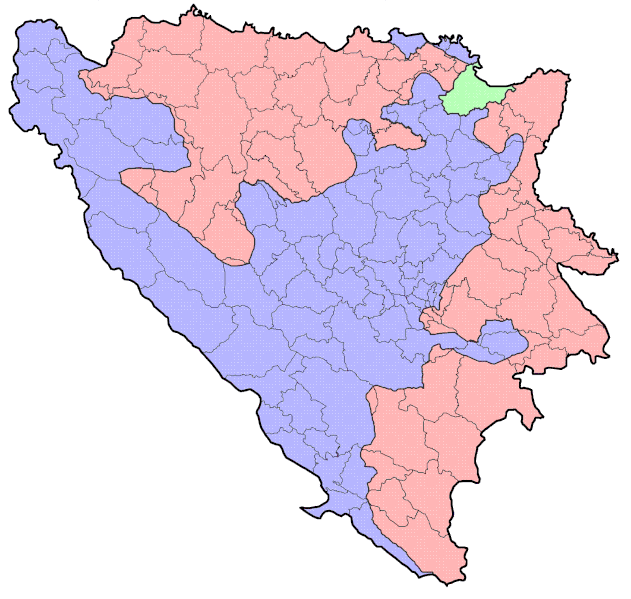 Srpska is the red region and the light green region is Brcko District, which is shared jointly by Srpska and the Federation of Bosnia. Effectively, Srpska is cut in half by Brcko district an ethnically mixed region with slightly more Bosniaks than Serbs and a minority of Croats. More importantly is that Srpska's de-facto capital, Banja Luka would be cut off from Serbia and it has no sea access. This makes a war effectively required in order for Srpska to secede as part of its territory is also part of the Federation of Bosnia and is a crucial connecting point between Srpska's capital and the rest of the region.
Other than the Balkans some unrecocgnized states in the Soviet Union are likely to declare their independence. One notable case is South Ossetia which is saying in 2008 they expect to be united with North Ossetia in Russia. This would be seen as declaration of war by Georgia who would undoubtedly rush to invade the unrecognized state as well as Abkhazia and may draw Russia into the conflict.
Kosovo's precedent could be used by Northern Cyrpus as well. A senior Turkish Cypriot official claims 2008 is the last window of opportunity for a resolution of the Cyprus conflict and that the EU is prepared to go forward with a plan for recognizing Northern Cyprus's independence, which Cyprus is blocking.
In Africa the precedent of Kosovo is possible for Western Sahara and Somaliland. Western Sahara's Polisario Front has warned they'll resume war with Morocco if no progress is made in talks on its status. This would likely be done after Polisario's Congress next June or July. Somaliland may also be recognized next year as well which could mean a war with Somalia as Somaliland plans to extend itself to the former border of British Somaliland.
With other possible independence conflicts arising in Taiwan, Madhesh, and Kurdistan which is aiming for a Kirkuk referendum the year 2008 could be a year of wars.
Thursday, December 27, 2007
2008, a year of conflict
BBC News reporter Nick Thorpe wrote an article on the developing conflict in the Balkans. In it he suggested, "2008 could be the year the clouds of war finally disappear." I can't help but admire his irrational optimism.
His biggest mistake, like with all reports in Western Europe and the United States is the presumptuous belief that Serbia can be easily pacified and isn't going to fight what it knows to be a losing battle. Of course, Serbia doesn't have to defeat NATO to win the battle. Not being able to understand this is why there's a rush to recognize Kosovo and little worry about the consequences.
One of the most foolish and possibly dangerous presumptions is that Serbia will give up Kosovo for EU membership. While President Boris Tadic is pro-European and would continue on the European path Vojislav Kostunica is a nationalist. Tadic's tacit approval of trading Kosovo for EU membership is believed to be why he scheduled a presidential election for January 20th. The EU's schedule for signing the SAA, a step towards entry talks, on January 28th is believed to be aimed at propping up Tadic before an expected second round of votes in the presidential election.
However, ambitiously propping up Tadic may due far more harm then good to the pro-European faction in Serbia. Kostunica has threatened to form a new coalition with the ultranationalist Serbian Radical Party which would command a majority of 128 seats, only two seats less than the current three-party coalition. If Kosovo declares its independence any time before February 3rd it could help the Serbian Radical Party's Tomislav Nikolic take the presidency where most polls show him and Tadic in a dead heat during the second round. A win for Nikolic is especially likely if Tadic appears willing to trade Kosovo for EU membership.
This would create a situation where the government is under the complete control of nationalists. Tadic's only chance would be to call a general election, however this might only serve to delay and could work in favor of the nationalists standing to gain off a declaration of independence by Kosovo. In interest of avoiding such a scenario Kostunica may refrain from taking sides until the presidential election is over and the new president is sworn in about two weeks later. In this case Kosovo may be able to gain two weeks without having to worry about reprisals from Serbia.
Tadic's conflict with Kostunica though, may have already been resolved after a resolution was backed by Tadic's party. The resolution calls for no agreement to be signed without recognizing Serbia's sovereignty and territorial integrity, implying that any agreement with Serbia must consider Kosovo as a part of Serbia. It also calls for stopping movement towards joining NATO. In particular Tadic suggested he would send in the Serbian army if Kosovo Serbs come under attack, though only with international support.
His willingness to do this is, however, in question and it's blamed largely on election politics. It's seemingly a shallow and transparent attempt at improving his poll numbers, but it could work all the same, presuming Kosovo keeps up its end in this bargain and does not declare independence until after February 3rd.
In this area Kosovo has already made its first big step towards independence:
Thorpe is also dismissive of Srpska and a move towards independence by them. This in itself seems to be little more than wishful thinking. Srpska's president has actually stated he would call a referendum on independence is Kosovo was recognized. Controversial police reforms are being delayed until mid-February, right after the Serbian elections. Should Nikolic win the presidency and his party forge a nationalist government Dodik may decide to call a referendum on independence or, if blocked in this move, declare independence outright. Such an event will mean nothing short of war as Srpska is cut in two by the Brcko district belonging to both the Serb entity and the Bosnian Federation. Nikolic and Kostunica would rush to support Bosnian Serbs, reigniting conflict in the Balkans.
One potential outcome which could inflame Serb irredentist interests is a push by the newly independent Kosovo to join with Albania. A member of Kosovo's government has suggested this as an inevitable outcome of independence. Current Prime Minister Agim Ceku has also stated this as a possibility, particularly if Serbia tries to force secession of Northern Kosovo. What exists in Kosovo now is a partition in fact and in the event of independence Serbia could push the north towards secession, especially if there is violence against Serbs. Irredentism from Kosovo would further push Serb irredentism and encourage Srpska to secede from Bosnia and join Serbia. It also could push Serbia into conflict with Albania.
While it's unlikely Serbia would ever be paid off by EU membership and this has actually served more to enrage Serbs then pacify them the same can not be said for other Balkan states. Macedonia and Montenegro, despite having reason to worry about Albanian irredentism, both having ethnic Albanian communities, appear set for recognizing Kosovo. Macedonia will, however, benefit from an invitation for NATO membership in April 2008. Albania will also be given NATO membership and Croatia, which could be faced with problems of Serb irredentism incited by Kosovo's independence and has an ethnic interest in preserving Bosnia. Croatia could also see its EU talks sped up towards reaching a 2010 accession date. Montenegro, likewise could be put on the fast track for EU and NATO membership, with EU accession as soon as 2012, according to member of the European Parliament.
This would stand to make Serbia's position worse, but also open room for far greater conflict. A merger of Kosovo with Albania would likely take place after NATO membership and with all four as NATO members Serbia would be almost completely surrounded by NATO members, making almost any conflict in the Balkans a conflict with all of NATO. Serbia's only option would then be to join the CSTO thus making any war in the Balkans a war between the U.S. and Russia.
However, while the optimists will ignorantly seek to allay concerns about the Balkans seeing renewed conflict they tend to ignore the ramifications outside of Europe. Most prominently is the development in Russia:
Fallout from Kosovo could go further into Taiwan which is also heading towards a likely war due to a referendum on joining the U.N. with the name Taiwan which both China and the U.S. see as provocation, despite the fact Taiwan will never make it into the U.N. Not only could Kosovo's independence and recognition help the pro-independence DPP win in the legislative and presidential elections another event may make this more likely. It all depends on a court verdict on Friday. If KMT candidate Ma Ying-jeou is found guilty and sentenced to 10 years or more or convicted on breach-of-trust he'll be unable to run for president. This will effectively guarantee a victory for Frank Hsieh of the DPP and could carry on to the KMT's performance in the legislative elections. Faced with the prospect of a DPP-controlled government, especially one with a two-thirds majority needed for changes to the constitution, and a successful referendum China may decide to launch an attack on Taiwan.
Suffice to say the clouds of war will probably not disappear, but instead darken and spread.
His biggest mistake, like with all reports in Western Europe and the United States is the presumptuous belief that Serbia can be easily pacified and isn't going to fight what it knows to be a losing battle. Of course, Serbia doesn't have to defeat NATO to win the battle. Not being able to understand this is why there's a rush to recognize Kosovo and little worry about the consequences.
One of the most foolish and possibly dangerous presumptions is that Serbia will give up Kosovo for EU membership. While President Boris Tadic is pro-European and would continue on the European path Vojislav Kostunica is a nationalist. Tadic's tacit approval of trading Kosovo for EU membership is believed to be why he scheduled a presidential election for January 20th. The EU's schedule for signing the SAA, a step towards entry talks, on January 28th is believed to be aimed at propping up Tadic before an expected second round of votes in the presidential election.
However, ambitiously propping up Tadic may due far more harm then good to the pro-European faction in Serbia. Kostunica has threatened to form a new coalition with the ultranationalist Serbian Radical Party which would command a majority of 128 seats, only two seats less than the current three-party coalition. If Kosovo declares its independence any time before February 3rd it could help the Serbian Radical Party's Tomislav Nikolic take the presidency where most polls show him and Tadic in a dead heat during the second round. A win for Nikolic is especially likely if Tadic appears willing to trade Kosovo for EU membership.
This would create a situation where the government is under the complete control of nationalists. Tadic's only chance would be to call a general election, however this might only serve to delay and could work in favor of the nationalists standing to gain off a declaration of independence by Kosovo. In interest of avoiding such a scenario Kostunica may refrain from taking sides until the presidential election is over and the new president is sworn in about two weeks later. In this case Kosovo may be able to gain two weeks without having to worry about reprisals from Serbia.
Tadic's conflict with Kostunica though, may have already been resolved after a resolution was backed by Tadic's party. The resolution calls for no agreement to be signed without recognizing Serbia's sovereignty and territorial integrity, implying that any agreement with Serbia must consider Kosovo as a part of Serbia. It also calls for stopping movement towards joining NATO. In particular Tadic suggested he would send in the Serbian army if Kosovo Serbs come under attack, though only with international support.
His willingness to do this is, however, in question and it's blamed largely on election politics. It's seemingly a shallow and transparent attempt at improving his poll numbers, but it could work all the same, presuming Kosovo keeps up its end in this bargain and does not declare independence until after February 3rd.
In this area Kosovo has already made its first big step towards independence:
Kosovo's two main political parties have agreed to form a coalition government which will lead the breakaway province towards independence from Serbia early next year, party sources said on Wednesday.While both the President and Prime Minister have pledged to work with the EU and US, they've also declared independence is "weeks away" just last week. Regardless of when Kosovo declares its independence the EU and US all plan to recognize it. So if Tadic follows up an independence declaration from Kosovo by signing the SAA, it could kill his support in presidential elections, giving Nikolic the presidency. He would likely assume office around February 17th. Kostunica then would be free to abandon the current governing coalition and join with the Radical Party.
Thorpe is also dismissive of Srpska and a move towards independence by them. This in itself seems to be little more than wishful thinking. Srpska's president has actually stated he would call a referendum on independence is Kosovo was recognized. Controversial police reforms are being delayed until mid-February, right after the Serbian elections. Should Nikolic win the presidency and his party forge a nationalist government Dodik may decide to call a referendum on independence or, if blocked in this move, declare independence outright. Such an event will mean nothing short of war as Srpska is cut in two by the Brcko district belonging to both the Serb entity and the Bosnian Federation. Nikolic and Kostunica would rush to support Bosnian Serbs, reigniting conflict in the Balkans.
One potential outcome which could inflame Serb irredentist interests is a push by the newly independent Kosovo to join with Albania. A member of Kosovo's government has suggested this as an inevitable outcome of independence. Current Prime Minister Agim Ceku has also stated this as a possibility, particularly if Serbia tries to force secession of Northern Kosovo. What exists in Kosovo now is a partition in fact and in the event of independence Serbia could push the north towards secession, especially if there is violence against Serbs. Irredentism from Kosovo would further push Serb irredentism and encourage Srpska to secede from Bosnia and join Serbia. It also could push Serbia into conflict with Albania.
While it's unlikely Serbia would ever be paid off by EU membership and this has actually served more to enrage Serbs then pacify them the same can not be said for other Balkan states. Macedonia and Montenegro, despite having reason to worry about Albanian irredentism, both having ethnic Albanian communities, appear set for recognizing Kosovo. Macedonia will, however, benefit from an invitation for NATO membership in April 2008. Albania will also be given NATO membership and Croatia, which could be faced with problems of Serb irredentism incited by Kosovo's independence and has an ethnic interest in preserving Bosnia. Croatia could also see its EU talks sped up towards reaching a 2010 accession date. Montenegro, likewise could be put on the fast track for EU and NATO membership, with EU accession as soon as 2012, according to member of the European Parliament.
This would stand to make Serbia's position worse, but also open room for far greater conflict. A merger of Kosovo with Albania would likely take place after NATO membership and with all four as NATO members Serbia would be almost completely surrounded by NATO members, making almost any conflict in the Balkans a conflict with all of NATO. Serbia's only option would then be to join the CSTO thus making any war in the Balkans a war between the U.S. and Russia.
However, while the optimists will ignorantly seek to allay concerns about the Balkans seeing renewed conflict they tend to ignore the ramifications outside of Europe. Most prominently is the development in Russia:
This follows a statement by the leader of the lower house saying such recognition would be looked at starting January. The timing can not be easily ignored and this is obviously a response to Kosovo's inevitable declaration of independence. It's end result is effectively expected, Russia will recognize Abkhazia, South Ossetia, and Transnistria. While Transistria's independence may be uneventful given President Voronin's trepid approach to Russia, Georgia has said recognition of Abkhazia and South Ossetia's independence would effectively be a declaration of war, something all sides have been preparing for since 1991 and especially since the Rose Revolution. What happens depends largely on Georgian elections scheduled for January 5th. Polls show a conflicting story with Saakashvili first in most and in some by an overwhelming majority among decided voters. He has also played things in his favor by putting forward a referendum on whether Georgia should join NATO. If Saakashvili can maintain his place in office it would be a serious blow to Russia and make a war in the region almost inevitable." - In case of the unilateral recognition of the independence of Kosovo, Russia will be entitled to change its approach to the so-called unrecognized republics in the post-soviet regions - South Ossetia, Abkhazia and Pridnestrovie," the chairman of the Council of the Federation (upper chamber of the Russian parliament), Sergei Mironov, said on Tuesday.
" - If countries start recognizing Kosovo randomly, this will be the first violent change of borders in Europe after World War Two, and the consequences will be unforeseeable,” Mironov warned at a press conference in Moscow.
According to the political leader, this will mark the beginning of a domino principle and then it will be possible to raise the issue of the recognition of Abkhazia and South Ossetia, which broke away form Georgia.
" - In case of such a recognition of Kosovo, Russia will be able to say that it is free in its approach, including towards the so-called unrecognized republics of Abkhazia, South Ossetia and Pridnestrovie,” Mironov said, using the official short-form name of the Pridnestrovskaia Moldavskaia Respublica (PMR).
Fallout from Kosovo could go further into Taiwan which is also heading towards a likely war due to a referendum on joining the U.N. with the name Taiwan which both China and the U.S. see as provocation, despite the fact Taiwan will never make it into the U.N. Not only could Kosovo's independence and recognition help the pro-independence DPP win in the legislative and presidential elections another event may make this more likely. It all depends on a court verdict on Friday. If KMT candidate Ma Ying-jeou is found guilty and sentenced to 10 years or more or convicted on breach-of-trust he'll be unable to run for president. This will effectively guarantee a victory for Frank Hsieh of the DPP and could carry on to the KMT's performance in the legislative elections. Faced with the prospect of a DPP-controlled government, especially one with a two-thirds majority needed for changes to the constitution, and a successful referendum China may decide to launch an attack on Taiwan.
Suffice to say the clouds of war will probably not disappear, but instead darken and spread.
Wednesday, December 19, 2007
Turkey Ups the Ante in Iraq
Turkey has revealed that they recently launched two major attacks into Northern Iraq. One was an airstrike on Sunday and another was a small-scale incursion on Tuesday. The incursion involved about 300 troops. This is more than in a previous incursion earlier this month involving about 100 special forces and six helicopters.
It would seem Turkey's government is escalating its offensive actions in Northern Iraq more each time. Previously reports of incursions were scattered, often involving limited incursions and limited strikes lacking any coordinated action. Now the attacks seem to be getting more coordinated and strategic. This is possibly due to U.S. intelligence being funnelled to Turkey's military. Apparently this attack was actually approved by the U.S.:
Turkey's incursions have stepped up in intensity and it is unlikely this is because the targets required more force. The Turkish government is probably either testing the waters to see how far the U.S. will tolerate Turkish action, or simply gradually building up force until they believe they have no choice but to launch a full-scale invasion. Now that they know this action is tolerated by the U.S. and understand the reaction created it is likely they will try to step up the next attack and make it larger. This could continue until they feel a large-scale attack would be accepted or becomes viable. Presently it is the winter which may prevent any major attack for the time being.
Should such an invasion take place Iraq will not be the only one impacted. A representative of the PKK recently said if Turkey invades Northern Iraq they will attack Azerbaijan. It is likely referring to supposed PKK camps in Nagorno-Karabakh which Azerbaijan has said could be attacked in the coming weeks. It would be a perfect excuse to prevent Nagorno-Karabakh from declaring independence after Kosovo.
It would seem Turkey's government is escalating its offensive actions in Northern Iraq more each time. Previously reports of incursions were scattered, often involving limited incursions and limited strikes lacking any coordinated action. Now the attacks seem to be getting more coordinated and strategic. This is possibly due to U.S. intelligence being funnelled to Turkey's military. Apparently this attack was actually approved by the U.S.:
The authoritative US daily quoted a military official as saying the US was "essentially handing (the Turks) their targets."The Iraqi government, on the other hand, claimed the Turkish government did not inform them of the attack or consult them. This certainly offended the Iraqi government which has tended to tolerate Turkey's incursions in the past. All the same they took a relatively conciliatory tone in spite of the attack:
Further to the report, the unnamed official although denying that the US had given official approval of Turkish actions in Iraq explained that "(the Turkish military ) said, 'We want to do something.' We said, 'Okay, it's your decision'."
However, Turkey has not received the same kind of measured criticism from the Kurds in Iraq:"We believe any unilateral actions to destabilise the situation will harm Iraq's interests and Turkey's interests at the same time," he said.
"But at the same time we fully understand and appreciate the legitimate security concern Turkey has over the PKK terrorist activities."
Massoud Barzani, leader of the autonomous Kurdish region in the north, condemned the assaults as a violation of Iraqi sovereignty that had undermined months of diplomacy. “These attacks hinder the political efforts exerted to find a peaceful solution based on mutual respect,” he said in a statement.The United States' apparent tacit approval of Turkey's incursion has also put a serious wedge in U.S. relations with the Kurds:
However, the Kurdish government said that its president, Masoud Barzani, had decided not to travel to Baghdad to meet Ms Rice, because of his anger over the US’s role in the Turkish military action.
Nechirvan Barzani, the prime minister of the Kurdish regional government, told Reuters the Kurdish president had decided not to go “because of the US position regarding the Turkish attacks and bombings”. He added: “The US supervises [Iraq’s] airspace so it is not possible that a violation of this airspace occurs without the knowledge or approval of the Americans.”
Differences between the U.S. and Kurds on Turkey's attacks as well as the Maliki's government restraint in condemning the attacks is sure to hurt the political situation in Iraq. Without Kurdish support Maliki's government would fall and if the Kurds see the U.S. as tolerating Turkey's actions they may fall behind many other political groups in Iraq seeking a U.S. withdrawal. Presently this is not likely to happen as the Turkish government is taking things carefully, however, this may not last much longer.
Turkey's incursions have stepped up in intensity and it is unlikely this is because the targets required more force. The Turkish government is probably either testing the waters to see how far the U.S. will tolerate Turkish action, or simply gradually building up force until they believe they have no choice but to launch a full-scale invasion. Now that they know this action is tolerated by the U.S. and understand the reaction created it is likely they will try to step up the next attack and make it larger. This could continue until they feel a large-scale attack would be accepted or becomes viable. Presently it is the winter which may prevent any major attack for the time being.
Should such an invasion take place Iraq will not be the only one impacted. A representative of the PKK recently said if Turkey invades Northern Iraq they will attack Azerbaijan. It is likely referring to supposed PKK camps in Nagorno-Karabakh which Azerbaijan has said could be attacked in the coming weeks. It would be a perfect excuse to prevent Nagorno-Karabakh from declaring independence after Kosovo.
Tuesday, December 18, 2007
Madhesh May Secede from Nepal
Though little attention is being paid to this crucial flashpoint a disturbing event has emerged with Madhesh. While the Unified Madheshi Front has set out a plan and list of demands for their move towards autonomy as well as preparing for several peaceful agitations they have also made it clear what will happen if the demands aren't met:
Things are certainly not helped by the inevitable declaration of independence by Kosovo. With many regions seceding and getting recognition Madheshi leaders may feel like they too will be recognized if the declare independence. If they do, Nepal might view it as aggression by India and seek China's help, which could spark a conflict between the two nations already experiencing tension over a border dispute. However, this is unlikely unless Madhesh tries to merge with India.
When this possible secession would take place is a bigger question. The Madheshi Front has stated their plan for agitations and given dates of five day-long agitations as part of their movement for autonomy:
Even if Madhesh follows through on secession and Nepal goes to war it may not incite a conflict beyond their borders, though it could be used by the King to try and remove the government once again. The most likely result is simply a major conflict in Madhesh and instability in other parts, though not significant. Perhaps the greatest danger posed by Madhesh is its potential to inflame the nationalist sentiment in Nepal, maybe resurrecting historical claims to parts of India which would result in a broader war if ever acted on.
“We are tired of the discrimination, and we would like to govern ourselves now. But if the government does not respect our demands, we will be forced to divide the Terai region from Nepal.”Nepal's government has already been wary over the potential for Madhesh to secede and considers Madhesh's calls for autonomy an attempt at disintegrating Nepal. However, due to their apparent neglect in outlining autonomy for Madhesh the region may move towards secession. After such a move war would not be far behind and Nepali leaders would undoubtedly blame India as many already have.
Things are certainly not helped by the inevitable declaration of independence by Kosovo. With many regions seceding and getting recognition Madheshi leaders may feel like they too will be recognized if the declare independence. If they do, Nepal might view it as aggression by India and seek China's help, which could spark a conflict between the two nations already experiencing tension over a border dispute. However, this is unlikely unless Madhesh tries to merge with India.
When this possible secession would take place is a bigger question. The Madheshi Front has stated their plan for agitations and given dates of five day-long agitations as part of their movement for autonomy:
JMF, however, said that the protest to be organised in Biratnagar, Birgunj, Rupandehi, Janakpur and Nepalgunj would be peaceful. Yadav also warned if the government tried to disrupt or resist the protest, it would not be in the interest of the government as well as of the country. JMF is organising agitation on December 29, January 5, 9, 12 and 14.Any moves towards secession are unlikely until after January 14th unless further violence instigates such a move. Like many other secessionist movements being brought to the surface right when Kosovo is approaching its independence, this seems to be aimed towards early next year. Whether Madhesh's push for secession would follow immediately after January 14th or take place beyond that depends on the government's reaction. If they grant autonomy to Madhesh it will likely prevent any further escalation for the time being, but it seems unlikely that the government aims for such an end and calls for secession may only serve to inflame their opposition.
�If the government fails to address the problem of the Madhesi, ethnic community, janajatis and marginalised groups the country may face disintegration," Yadav warned further.
Even if Madhesh follows through on secession and Nepal goes to war it may not incite a conflict beyond their borders, though it could be used by the King to try and remove the government once again. The most likely result is simply a major conflict in Madhesh and instability in other parts, though not significant. Perhaps the greatest danger posed by Madhesh is its potential to inflame the nationalist sentiment in Nepal, maybe resurrecting historical claims to parts of India which would result in a broader war if ever acted on.
Saturday, December 15, 2007
The Second Sino-Indian War
Chinese intrusions on the Bhutanese border have led to small-scale standoff between China and India. India recently sent 6,000 troops to the disputed region in Sikkim near where intrusions have been taking place. China's incursions into Bhutan and aggressive behavior near the border with India have also been raising alarms, leading to a high-level meeting between India's External Affairs Minister and top defense officials. India's position in the eastern region has been inadequate, leaving the region open to instability.
Of particular worry to India is Chinese movement towards the Siliguri corridor, which is a vital point connecting India's northeast with the rest of the country. China has been increasingly aggressive near Sikkim, which was considered an independent state by China until 2003, also near the corridor and part of a long-standing border dispute between the two countries. Should China push through and take the small Siliguri corridor, only about 25 miles wide, it would leave India's northeast cut off by land. The region hosts several insurgent groups opposed to India's government.
India's domestic situation is also in question. While current run by the Congress Party, which wants to maintain ties with China, the leading opposition BJP, a Hindu nationalist party, believes the government is being too soft and ignoring the Chinese threat. Most notably indications are that the BJP could see a return to power in government with the recent announcement that their candidate for Prime Minister will be LK Advani. Advani is seen as the man who brought the BJP to power before and he may be able to do it again. While elections are currently set 2009 it's believed there could be snap polls soon now that Congress's ally, the Left Front is looking to abandon them and form a third force in the political sphere.
Should elections be held in 2008 it would become a battle between the three groups and if the Left is able to rally significant support by uniting their efforts, they could bring down the Congress enough to usher the BJP to power. This would not only mean a deterioration in relations with China, but could mean expanded conflict in other spheres. Nepal is the most likely flashpoint for the two countries.
While Nepal has many potential flashpoints stewing under the surface, the one bubbling up most right now is the conflict in Madhesh or Terai. Recently several groups pushing Madesh to be recognized as an autonomous region have united their efforts and are planning to launch a "peaceful" agitation against the government of Nepal beginning December 30th. Leaders have called from the arms groups to join this peaceful movement and lay down their arms. This is all taking place alongside an unstable situation in the Terai region resulting in a security crackdown in the area.
The situation has devolved even further with several members of the government resigning in protest, calling for Madhesh to be given autonomous status and planning on forming a united Madhesi political party. While all claims are coming that this is aimed at "peaceful agitation" the result may completely different, especially if the current government moves to halt the movement for autonomy.
Madhesh's push for autonomy is, however, serving to unite the Nepali government together after a deal was reached on setting up a republic and holding elections, now scheduled for April next year. Maoist leader Prachanda and several other Left parties have been joining with Nepali Congress to oppose the moves by Madhesi members of government, attempting to keep them from causing any instability in Terai region. Many nationalist members of the government in all parties are uniting together to oppose the moves in Terai and are even accusing India and the King of Nepal of instigating the instability in the region and attempting to "disintegrate" Nepal.
Nationalists are, according to Prakash Koraila, uniting against India and siding with China. They see China as supporting their territorial integrity, while India is seeking to tear their country apart. Koraila stated that he believe China would not allow India to disintegrate China. A Hindu nationalist government in India would oppose establishing a republican government and support a Madhesh movement that wants to make Hindi a national language. Such a government would further stoke tensions in Nepal and increase frustrations with India, as well as creating greater tension with China.
Awaking the nationalists, however, may not be an entirely good thing as some may favor a push to reject the Sugauli Treaty and restore Nepal to its previous borders establishing a Greater Nepal. Any attempt at taking territory from India and merging it with Nepal is likely to incite India and China rushing into Nepal to prevent this may even bring out the British, who have long-standing ties with Nepali Ghurkas and would object to any conflict in the country starting the first major conflict between the British and Chinese since the Opium Wars.
Of particular worry to India is Chinese movement towards the Siliguri corridor, which is a vital point connecting India's northeast with the rest of the country. China has been increasingly aggressive near Sikkim, which was considered an independent state by China until 2003, also near the corridor and part of a long-standing border dispute between the two countries. Should China push through and take the small Siliguri corridor, only about 25 miles wide, it would leave India's northeast cut off by land. The region hosts several insurgent groups opposed to India's government.
India's domestic situation is also in question. While current run by the Congress Party, which wants to maintain ties with China, the leading opposition BJP, a Hindu nationalist party, believes the government is being too soft and ignoring the Chinese threat. Most notably indications are that the BJP could see a return to power in government with the recent announcement that their candidate for Prime Minister will be LK Advani. Advani is seen as the man who brought the BJP to power before and he may be able to do it again. While elections are currently set 2009 it's believed there could be snap polls soon now that Congress's ally, the Left Front is looking to abandon them and form a third force in the political sphere.
Should elections be held in 2008 it would become a battle between the three groups and if the Left is able to rally significant support by uniting their efforts, they could bring down the Congress enough to usher the BJP to power. This would not only mean a deterioration in relations with China, but could mean expanded conflict in other spheres. Nepal is the most likely flashpoint for the two countries.
While Nepal has many potential flashpoints stewing under the surface, the one bubbling up most right now is the conflict in Madhesh or Terai. Recently several groups pushing Madesh to be recognized as an autonomous region have united their efforts and are planning to launch a "peaceful" agitation against the government of Nepal beginning December 30th. Leaders have called from the arms groups to join this peaceful movement and lay down their arms. This is all taking place alongside an unstable situation in the Terai region resulting in a security crackdown in the area.
The situation has devolved even further with several members of the government resigning in protest, calling for Madhesh to be given autonomous status and planning on forming a united Madhesi political party. While all claims are coming that this is aimed at "peaceful agitation" the result may completely different, especially if the current government moves to halt the movement for autonomy.
Madhesh's push for autonomy is, however, serving to unite the Nepali government together after a deal was reached on setting up a republic and holding elections, now scheduled for April next year. Maoist leader Prachanda and several other Left parties have been joining with Nepali Congress to oppose the moves by Madhesi members of government, attempting to keep them from causing any instability in Terai region. Many nationalist members of the government in all parties are uniting together to oppose the moves in Terai and are even accusing India and the King of Nepal of instigating the instability in the region and attempting to "disintegrate" Nepal.
Nationalists are, according to Prakash Koraila, uniting against India and siding with China. They see China as supporting their territorial integrity, while India is seeking to tear their country apart. Koraila stated that he believe China would not allow India to disintegrate China. A Hindu nationalist government in India would oppose establishing a republican government and support a Madhesh movement that wants to make Hindi a national language. Such a government would further stoke tensions in Nepal and increase frustrations with India, as well as creating greater tension with China.
Awaking the nationalists, however, may not be an entirely good thing as some may favor a push to reject the Sugauli Treaty and restore Nepal to its previous borders establishing a Greater Nepal. Any attempt at taking territory from India and merging it with Nepal is likely to incite India and China rushing into Nepal to prevent this may even bring out the British, who have long-standing ties with Nepali Ghurkas and would object to any conflict in the country starting the first major conflict between the British and Chinese since the Opium Wars.
Brewing Conflict in the Horn of Africa
Somalia's transitional government, set up after Ethiopia's invasion of the country almost exactly one year ago has recently announced it is not in control of 80% of the country. More disturbingly the government is saying the Islamic Courts Union is regrouping and planning a large-scale offensive against the transitional government and the Ethiopian military. They also say the government has no power to stop them. Somali Islamic militants have begun to come out of hiding after months of relative peace and are bulking up with more weapons and foreign fighters.
However, while it's true the transitional government does not have control of 80% of the country, that 80% is mostly out of control of the Islamic Courts Union as well. Northern Somalia, around half the country, is controlled by two other warring factions, Somaliland and Puntland. Somaliland is an unrecognized state comprising most of what was British Somaliland, with its own military, government, and unofficial embassies in several countries. Puntland has not declared independence, but instead declared itself an autonomous region with its own military and government, though still part of Somalia.
Somaliland wants to take all territory once occupying British Somaliland, which has brought them into conflict with Puntland on several occasions. The main dispute is on the regions of Sanaag and Sool. Sanaag was previously administered by Puntland but has since declared itself as the autonomous state of Maakhir. The region is still claimed by both Puntland and Somaliland.
Sool has been switching between Puntland and Somaliland for several years, though lately Somaliland has gained the upper hand. Somaliland's strength in Sool and their seizure of Las Anod, Sool's capital, has alarmed Puntland, which threatened to launch a counter-attack to retake Las Anod. Somaliland's military since last month have moved their troops nearly 35 kilometers away from Puntland's capital of Garowe. Puntland's situation has also been hurt by defections of their military officers in Sool.
What complicates matters in the region is Somaliland's unrecognized status. As Kosovo's independence approaches the question of whether other unrecognized states should receive recognition will receive renewed debate. According to several sources Ethiopia is considering recognition of Somaliland as a way of dampening Somali irredentism and there is apparently a dispute between the United States Defense Department and and State Department on whether the U.S. should recognize Somaliland as a sovereign nation.
However, the Defense Department's motivations may not be related to stability in Somalia as they claim, but instead about infrastructure for AFRICOM, a new U.S. military command like Pacific Command. In particular reports say the Pentagon is interested in the port of Berbera, but because of Somaliland's status it is currently not viable for AFRICOM. So the Pentagon and Defense Department have been pushing for recognition of Somaliland and Kosovo may provide the perfect opportunity to push their agenda. Once Somaliland gains its independence the U.S. can set up a base in the new nation to expand its operations in Africa, increasingly coming under the influence of China and the European Union.
The problem is, it is unlikely Puntland will take such recognition laying down. Indeed, Somaliland being recognized by the U.S. and Ethiopia after invading Sool and expelling Puntland's forces could be seen by Puntland as rewarding aggression. While Puntland has been strongly tied with Ethiopia, such recognition could lead to their estrangement of ties. This is where the conflict could broaden. Should Puntland disengage from Ethiopia they may look for a new ally in the region and the obvious choice would be Eritrea.
Eritrea and Ethiopia have been at a standoff ever since Eritrea gained independence from Ethiopia. An unsettled border dispute between the nations previously resulted in a major war between the two countries. Since the war ended in a stalemate the two states have engaged in a constant cold war with Eritrea backing the ONLF in Ethiopia and the two sides waging proxy wars in Somalia. In fact, it is believed the ONLF's war in Ogaden is partly the cause of Ethiopia's invasion of Somalia. The ONLF is believed to have coordinated actions with the Islamic Courts Union in Somalia and both groups have been supported by Eritrea. Ethiopia's backing of the transitional government is seen as part of this proxy conflict with Eritrea.
In the event Somaliland does get recognized by Ethiopia and Puntland forges ties with Eritrea, a conflict between the two Somali regions could expand to include a conflict between the Islamic Courts Union and transitional government, as well as Ethiopian troops in Somalia. If Puntland manages to gain ground against Somaliland and Ethiopia intervenes directly, Eritrea may take advantage of the opening to make a thrust into Ethiopia itself.
Eritrea's justification would be the unresolved border dispute. The border was effectively decided by the international community in favor of Eritrea, but Ethiopia has refused to acknowledge the ruling. With 125,000 troops on the border facing 100,000 Ethiopian troops, Eritrea stands a decent chance of pushing through if some of those Ethiopians troops should be diverted to Somalia. Considering a U.N. force in the area is set to leave in the following month, when Kosovo is widely expected to gain its independence, which would likely be followed up by Somaliland's independence, Eritrea seems to have a perfect opening coming up in the following months. A renewed attack by the Islamic Courts Union next year alongside a conflict between Puntland and Somaliland could distract Ethiopia enough to give Eritrea a chance to try and resolve the border issue by force. The end result would be a wider and more deadly conflict than the previous war between Ethiopia and Eritrea.
However, while it's true the transitional government does not have control of 80% of the country, that 80% is mostly out of control of the Islamic Courts Union as well. Northern Somalia, around half the country, is controlled by two other warring factions, Somaliland and Puntland. Somaliland is an unrecognized state comprising most of what was British Somaliland, with its own military, government, and unofficial embassies in several countries. Puntland has not declared independence, but instead declared itself an autonomous region with its own military and government, though still part of Somalia.
Somaliland wants to take all territory once occupying British Somaliland, which has brought them into conflict with Puntland on several occasions. The main dispute is on the regions of Sanaag and Sool. Sanaag was previously administered by Puntland but has since declared itself as the autonomous state of Maakhir. The region is still claimed by both Puntland and Somaliland.
Sool has been switching between Puntland and Somaliland for several years, though lately Somaliland has gained the upper hand. Somaliland's strength in Sool and their seizure of Las Anod, Sool's capital, has alarmed Puntland, which threatened to launch a counter-attack to retake Las Anod. Somaliland's military since last month have moved their troops nearly 35 kilometers away from Puntland's capital of Garowe. Puntland's situation has also been hurt by defections of their military officers in Sool.
What complicates matters in the region is Somaliland's unrecognized status. As Kosovo's independence approaches the question of whether other unrecognized states should receive recognition will receive renewed debate. According to several sources Ethiopia is considering recognition of Somaliland as a way of dampening Somali irredentism and there is apparently a dispute between the United States Defense Department and and State Department on whether the U.S. should recognize Somaliland as a sovereign nation.
However, the Defense Department's motivations may not be related to stability in Somalia as they claim, but instead about infrastructure for AFRICOM, a new U.S. military command like Pacific Command. In particular reports say the Pentagon is interested in the port of Berbera, but because of Somaliland's status it is currently not viable for AFRICOM. So the Pentagon and Defense Department have been pushing for recognition of Somaliland and Kosovo may provide the perfect opportunity to push their agenda. Once Somaliland gains its independence the U.S. can set up a base in the new nation to expand its operations in Africa, increasingly coming under the influence of China and the European Union.
The problem is, it is unlikely Puntland will take such recognition laying down. Indeed, Somaliland being recognized by the U.S. and Ethiopia after invading Sool and expelling Puntland's forces could be seen by Puntland as rewarding aggression. While Puntland has been strongly tied with Ethiopia, such recognition could lead to their estrangement of ties. This is where the conflict could broaden. Should Puntland disengage from Ethiopia they may look for a new ally in the region and the obvious choice would be Eritrea.
Eritrea and Ethiopia have been at a standoff ever since Eritrea gained independence from Ethiopia. An unsettled border dispute between the nations previously resulted in a major war between the two countries. Since the war ended in a stalemate the two states have engaged in a constant cold war with Eritrea backing the ONLF in Ethiopia and the two sides waging proxy wars in Somalia. In fact, it is believed the ONLF's war in Ogaden is partly the cause of Ethiopia's invasion of Somalia. The ONLF is believed to have coordinated actions with the Islamic Courts Union in Somalia and both groups have been supported by Eritrea. Ethiopia's backing of the transitional government is seen as part of this proxy conflict with Eritrea.
In the event Somaliland does get recognized by Ethiopia and Puntland forges ties with Eritrea, a conflict between the two Somali regions could expand to include a conflict between the Islamic Courts Union and transitional government, as well as Ethiopian troops in Somalia. If Puntland manages to gain ground against Somaliland and Ethiopia intervenes directly, Eritrea may take advantage of the opening to make a thrust into Ethiopia itself.
Eritrea's justification would be the unresolved border dispute. The border was effectively decided by the international community in favor of Eritrea, but Ethiopia has refused to acknowledge the ruling. With 125,000 troops on the border facing 100,000 Ethiopian troops, Eritrea stands a decent chance of pushing through if some of those Ethiopians troops should be diverted to Somalia. Considering a U.N. force in the area is set to leave in the following month, when Kosovo is widely expected to gain its independence, which would likely be followed up by Somaliland's independence, Eritrea seems to have a perfect opening coming up in the following months. A renewed attack by the Islamic Courts Union next year alongside a conflict between Puntland and Somaliland could distract Ethiopia enough to give Eritrea a chance to try and resolve the border issue by force. The end result would be a wider and more deadly conflict than the previous war between Ethiopia and Eritrea.
Subscribe to:
Posts (Atom)